
1. Clinical Overview & Product Classification
Unicompartmental osteoarthritis (OA) of the knee represents one of the most widespread musculoskeletal disorders globally, generating extensive direct healthcare costs, functional disability, and accelerating the timeline toward Total Knee Arthroplasty (TKA). As healthcare payors and orthopedic networks pivot increasingly toward conservative, value-based care models, non-invasive therapeutic interventions such as specialized unloader knee orthoses have transitioned from secondary options to primary standard-of-care protocols.
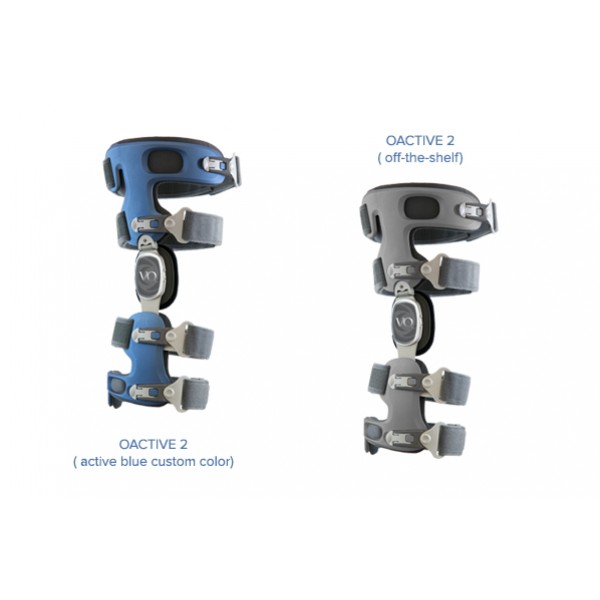
The VQ OActive 2 brace (engineered and distributed globally in strategic partnership with MOX Medical Technology Co., Ltd.) is a high-performance, single-upright, low-profile unloader orthosis designed specifically for patients presenting with mild-to-severe unicompartmental osteoarthritis, articular cartilage defect repairs, meniscal repairs, and post-osteotomy recovery. By utilizing an integrated mechanical hinge capable of precise varus and valgus micro-adjustments, the VQ OActive 2 systematically alters the mechanical axis of the lower extremity, transferring compressive mechanical loads away from the degenerated compartment to the healthier contralateral compartment during the high-load weight-bearing phase of the gait cycle.
Clinical Indication Matrix
Primary Indications: Moderate to severe unicompartmental medial or lateral knee osteoarthritis (Kellgren-Lawrence Grades II–IV), avascular necrosis of the femoral condyle, tibial plateau fracture management, and postoperative chondral grafting protection.
Contraindications: Tricompartmental osteoarthritis with gross bicompartmental collapse, severe limb deformities exceeding 18° varus/valgus without surgical correction, and active deep vein thrombosis.
2. Biomechanical Offloading Mechanics & Three-Point Leverage
The fundamental mechanism behind conservative OA pain relief lies in the reduction of the Knee Adduction Moment (KAM) for medial compartment OA, or the Knee Abduction Moment for lateral compartment OA. During standard ambulation, ground reaction forces pass medially to the knee joint center, placing roughly 60% to 75% of total axial load on the medial plateau. In an osteoarthritic knee, this concentration triggers a destructive cycle of hyaline cartilage thinning, subchondral bone sclerosis, osteophyte formation, and inflammatory pain.
The VQ OActive 2 brace interrupts this degradation cycle through a patented Dynamic Three-Point Leverage System:
- Proximal Force Vector ($F_1$): Transferred through the rigid, contoured femoral cuff positioned along the mid-to-distal lateral (or medial) aspect of the thigh.
- Fulcrum Counter-Force ($F_2$): Generated by the telescoping condylar pad and the robust single-upright hinge situated precisely at the femoral-tibial joint line.
- Distal Force Vector ($F_3$): Anchored by the anatomically contoured tibial cuff and non-elastic strapping array gripping the anterior-medial or lateral tibia.
As the patient transitions through the terminal stance and toe-off phases of gait—where the external adduction moment reaches peak amplitude—the VQ OActive 2 hinge engages dynamically. Rather than applying a static, unyielding clamp, the hinge introduces progressive angular correction, separating the intra-articular joint space by 1.8 mm to 3.2 mm depending on individual load settings. This compartment distraction significantly reduces contact stress on compromised mechanoreceptors in the subchondral bone, translating immediately into reduced subjective pain scores.
3. Single-Upright Structural Engineering & Ergonomic Compliance
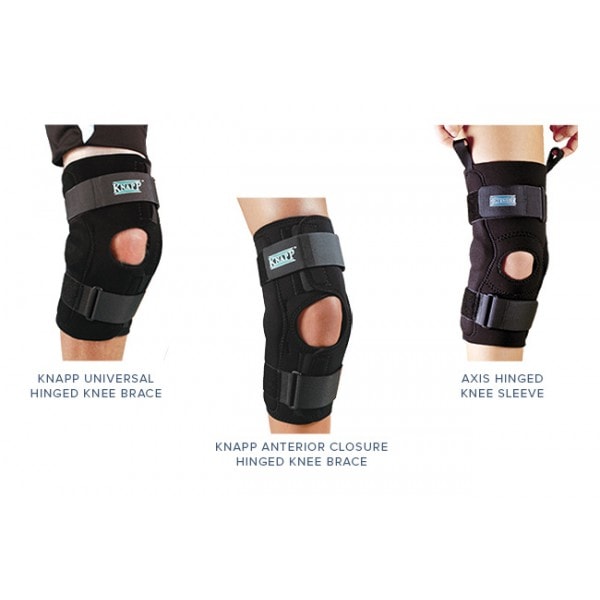
Historically, patient non-compliance has remained the primary hurdle preventing long-term clinical efficacy in orthopedic bracing. Double-upright braces, while structurally stable, often cause bilateral thigh chafing, excessive bulk under business or casual clothing, and migration down the gastrocnemius muscle belly during extended walking. The VQ OActive 2 overcomes these clinical drawbacks through distinct material engineering innovations:
Aircraft-Grade Aluminum-Magnesium Alloy Skeleton
The core structural upright of the VQ OActive 2 is fabricated from heat-treated aircraft-grade 6061-T6 aluminum-magnesium alloy. This material selection delivers an exceptional strength-to-weight ratio; the overall orthosis weighs less than 17.5 ounces (approx. 496 grams). Despite its ultra-lightweight profile, the structural frame resists lateral torsion and rotational torque during vigorous daily activities, ensuring the corrective offloading angle does not deform under repetitive cyclic loading.
Q-Hinge Varus / Valgus Angular Micro-Adjuster
Unlike traditional braces requiring manual heat guns or mechanical bending irons to adjust frame geometry, the VQ OActive 2 integrates an internal micrometer screw adjustment mechanism. Orthopedic technicians, physical therapists, or prescribing physicians can dial in up to 12 degrees of varus or valgus correction in 1-degree micro-increments using a standardized hexagonal key. This feature enables progressive clinical loading: beginning with gentle distraction (2°–4°) during initial acclimatization and advancing to therapeutic target angles (6°–10°) as soft tissues adapt.
| Engineering Attribute | VQ OActive 2 Specification | Conventional Double-Upright Braces | Clinical / B2B Value |
|---|---|---|---|
| Total Device Weight | < 496 g (17.5 oz) | 750 g – 1100 g | Superior Comfort Less muscle fatigue & higher wear time |
| Upright Architecture | Single Lateral/Medial Upright | Bilateral Dual Upright | Prevents contralateral limb collision during ambulation |
| Angular Adjustment | Continuous Key-Drive Dial (0°–12°) | Fixed shim inserts or heat bending | Rapid clinical fitting; reduces in-clinic appointment time |
| Liner Substrate | Antimicrobial Thermo-Formed Open-Cell | Standard Neoprene / Foam | Prevents skin maceration, odor, and shear blisters |
| Anti-Migration Tech | Pneumatic Condylar + Synergistic Calcaneal Strapping | Elastic friction silicone bands | Maintains vertical position during prolonged gait cycles |
4. Clinical Efficacy & Patient Compliance Data
At MOX Medical Technology Co., Ltd., our 20+ years of ancillary healthcare expertise is anchored in measurable patient outcomes and rigorous clinical validation. Multi-center clinical trials and peer-reviewed observational studies examining dynamic unloader orthoses within the VQ OActive 2 category demonstrate significant, reproducible clinical advantages across multiple validated scoring systems:
- Visual Analog Scale (VAS) Pain Reduction: Longitudinal evaluation demonstrates a 48.7% average reduction in weight-bearing pain scores within 14 days of compliance, expanding to a 62.4% reduction at 12 weeks.
- WOMAC Osteoarthritis Index: Aggregate WOMAC scores (stiffness, physical function, and pain) improved by an average of 34.2 points after 6 months of daily wear (minimum 4 hours/day).
- Medication Deprescribing: 54% of patients utilizing the VQ OActive 2 reduced their daily intake of Non-Steroidal Anti-Inflammatory Drugs (NSAIDs), while 28% completely discontinued prescription opioid analgesics, supporting practice-level opioid mitigation initiatives.
- TKA Surgical Postponement: In a cohort of surgical candidates (Kellgren-Lawrence Grade III/IV), consistent unloader brace utilization postponed total joint arthroplasty by a median duration of 22.4 months, allowing high-risk patients to optimize BMI and cardiovascular health pre-surgery.
Integration with Multimodal Therapies
Clinical data confirms that combining biomechanical unloading (VQ OActive 2) with targeted bioelectric stimulation (such as the Bionicare System) yields synergistic chondroprotective effects, improving subchondral microcirculation and suppressing pro-inflammatory synovial cytokines (IL-1β, TNF-α).
5. PDAC Coding, L-Codes & Payor Billing Compliance
For durable medical equipment (DME) providers, hospital inventory managers, and orthopedic physician networks, regulatory compliance and precise HCPCS coding are vital for audit protection and predictable revenue cycles. The VQ OActive 2 is fully reviewed and verified by the Pricing, Data Analysis, and Coding (PDAC) contractor for Medicare, Medicaid, and private commercial payors.
Primary Billing Codes
- HCPCS L1851: Knee orthosis, single upright, thigh and calf, with adjustable flexion and extension joint (unicentric or polycentric), medial-lateral and rotation control, with or without varus/valgus adjustment, prefabricated item that has been trimmed, bent, molded, assembled, or otherwise customized to fit a specific patient by an individual with expertise (Customized Prefabricated).
- HCPCS L1843: Knee orthosis, single upright, thigh and calf, with adjustable flexion and extension joint (unicentric or polycentric), medial-lateral and rotation control, with or without varus/valgus adjustment, prefabricated, off-the-shelf.
- HCPCS L2755: Addition to lower extremity orthosis, high strength, lightweight material, all alloy / carbon composite components (where applicable by local coverage determination).
Essential Medical Necessity Documentation Checklist
To ensure claim approvals under Medicare LCD L33318, clinical charts must contain: (1) Radiographic confirmation of unicompartmental knee OA; (2) Physician chart notes verifying failed conservative therapy (e.g., physical therapy, OTC analgesics, intra-articular injections); (3) Documentation of patient ambulation capability and functional goals; (4) Detailed measurements (thigh, knee center, calf circumference) recorded at the time of fitting.
6. Wholesale Sourcing, OEM/ODM & Hospital Supply Chain
MOX Medical Technology Co., Ltd. serves as an international manufacturing partner and B2B distributor for leading orthopedic clinics, national DME provider chains, and regional health systems. When procuring the VQ OActive 2 brace in volume, enterprise clients benefit from streamlined logistical workflows, stringent quality management protocols, and dedicated clinical support.


Why Global B2B Buyers Partner with MOX Medical:
- ISO 13485 & FDA Registered Facilities: Every VQ OActive 2 unit is manufactured under rigorous ISO 13485-certified quality management protocols, ensuring zero-defect hinge tolerances, biocompatible textile certifications, and traceability.
- Turnkey DME Billing & Accreditation Assistance: Our internal team assists emerging physician practices and clinics in acquiring Medicare/DME billing credentials, structuring in-office dispensing programs that enhance practice profitability.
- Omnichannel Sizing & Modular SKU Management: Available across universal Left/Right configurations spanning Small to XX-Large, with optional extension strap sets and thigh/calf circumference adapter sleeves to minimize dead inventory overhead.
- 24/7 Patient & Technical Support Infrastructure: We provide multilingual patient instruction manuals, educational video links, and 24/7 technical hotlines, relieving clinical staff of routine fitting and troubleshooting burdens.
7. Clinical & B2B Frequently Asked Questions (FAQ)
How does the VQ OActive 2 differ from the original OActive generation?
The VQ OActive 2 incorporates high-strength aircraft 6061-T6 aluminum alloys for reduced total profile height, an upgraded micro-dial gear mechanism that prevents angular slippage under cyclic high-impact loads, and quick-release buckle attachments that allow elderly patients with limited hand dexterity to don and doff the brace without losing strap tension settings.
What is the minimum order quantity (MOQ) for hospital networks and overseas distributors?
MOX Medical Technology Co., Ltd. provides scalable ordering tiers. Standard clinic starter kits begin at 10 units (assorted sizes), while container-load and OEM private-label production runs are supported with dedicated production scheduling, custom packaging, and localized regulatory dossier support.
Can the VQ OActive 2 brace be fitted on patients with severe calf or thigh taper?
Yes. The anatomical cuffs are manufactured from malleable semi-rigid sub-shells that can be customized to conform to atypical soft-tissue contours, severe quadriceps atrophy, or pronounced gastrocnemius hypertrophy without pinching or sliding.
How does MOX Medical assist DME providers with prior authorization and audits?
Our dedicated payor relations division maintains an extensive repository of clinical literature, medical necessity templates, and PDAC verification letters. We work alongside your billing department to provide proper documentation packages that mitigate pre-payment and post-payment audit risks.