
1. Executive Summary & Clinical Context
Ligamentous disruptions of the knee joint—specifically involving the Anterior Cruciate Ligament (ACL), Posterior Cruciate Ligament (PCL), Medial Collateral Ligament (MCL), and Lateral Collateral Ligament (LCL)—represent a significant burden in clinical orthopedics and sports medicine. Globally, over 200,000 ACL ruptures occur annually in the United States alone, with surgical reconstruction remaining the definitive treatment for active populations. However, post-operative graft preservation, secondary stabilization, and non-operative management of partial tears depend heavily on external mechanical intervention.
A high-performance ligament knee support system acts as an exogenous force vector controller. It restricts pathomechanical joint displacement while allowing functional sagittal plane range of motion (ROM). For hospital systems, Durable Medical Equipment (DME) providers, and international distributors, selecting a medical-grade ligament knee support requires balancing precise kinematic alignment, material fatigue resistance, clinical compliance, and billing code compatibility (such as HCPCS L1845/L1852).
At MOX Medical Technology Co., Ltd., our 20+ years of ancillary healthcare expertise has established a patient-centered model backed by rigid engineering standards. This technical paper details the physical, mechanical, and biological principles underlying modern functional ligament braces. It outlines the specific evaluation metrics B2B procurement teams must require from medical device manufacturers.
Key Insight for Healthcare Procurement Officers
Functional knee bracing is not simply an elastic compression sleeve; it is a rigid structural orthosis engineered to resist multi-planar subluxation forces exceeding 400 Newtons during pivot-shift maneuvers. Ensuring frame structural integrity and hinge polycentric fidelity directly correlates with reduced re-tear rates post-ACL reconstruction.
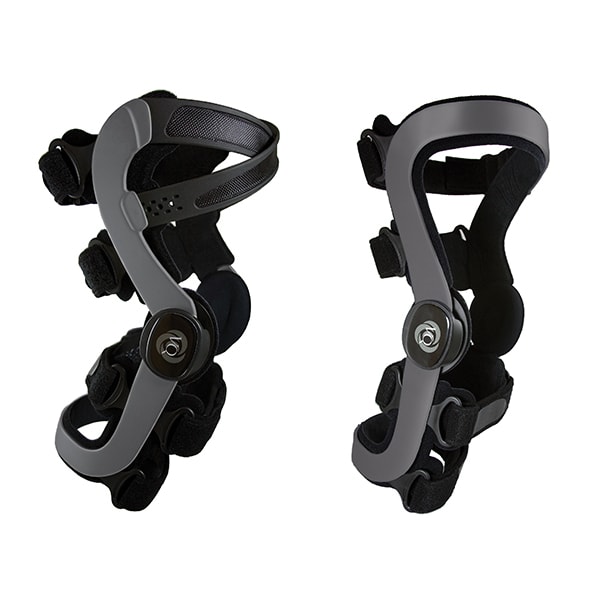
2. Biomechanical Kinematics & The 4-Point Dynamic Leverage System
To mitigate destabilizing forces on damaged or healing ligaments, structural bracing relies on well-defined mechanical physics. The gold standard in functional ligament knee support design is the 4-Point Dynamic Leverage System. This system establishes opposed rigid forces across the femur and tibia to counteract Anterior Tibial Translation (ATT) and abnormal rotational movements.
The Mechanical Physics of ATT Reduction
Anterior tibial displacement occurs when quad contraction or ground impact drives the tibia forward relative to the femoral condyles. In an ACL-deficient or post-reconstruction knee, this shift subjects the tissue graft to destructive tensile loads. The 4-point rigid frame applies opposed mechanical moments to neutralize this force:
- Point 1 (Anterior Femoral Cuff): Anchors the proximal extremity of the rigid frame to the anterior aspect of the mid-to-distal femur, establishing an initial rigid posterior moment.
- Point 2 (Posterior Tibial Cuff): Positions a rigid aluminum or composite bar behind the distal tibia, stabilizing the lower extremity against posterior drop.
- Point 3 (Posterior Femoral Strap): Secures across the popliteal fossa superior to the condyles, pushing the distal femur forward relative to the knee pivot point.
- Point 4 (Anterior Tibial Strap): Applies an opposing, direct posterior force across the anterior tibial tuberosity. This force directly opposes anterior displacement of the tibia.
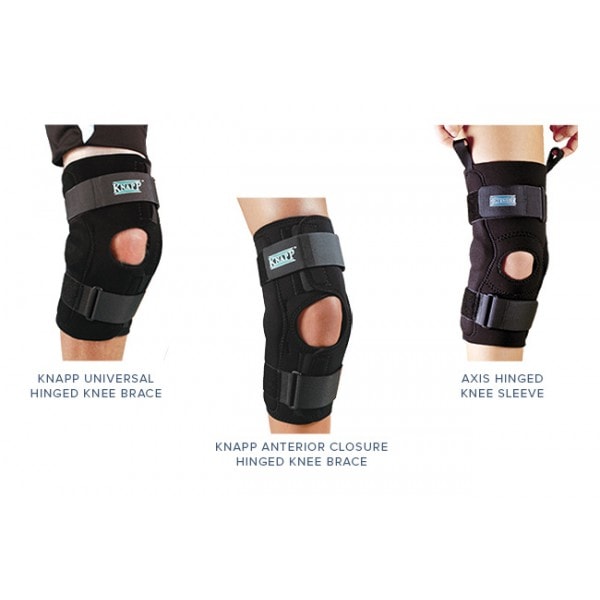
Polycentric vs. Monocentric Hinge Kinematics
The anatomical knee joint does not rotate around a single fixed axis. Instead, it exhibits a sliding and rolling motion (helical axis of motion) where the Instantaneous Center of Rotation (ICR) moves posteriorly along a parabolic curve as the knee flexes from 0° to 120°.
Monocentric (single-pivot) hinges fail to follow this natural path. They create shearing friction against the condyles, causing the brace to migrate down the leg and causing soft tissue irritation. Advanced ligament knee support systems from MOX Medical Technology Co., Ltd. use dual-axis polycentric hinges with synchronized internal gear tracks. This mechanism mirrors human femoral tracking, minimizing brace migration and preventing shear stress across healing ligament grafts.
3. Material Science & Structural Stress-Strain Performance
The functional efficacy of a rigid knee support depends on the physical properties of its frame. Under dynamic loading conditions—such as cutting, pivoting, or heavy rehabilitation exercises—frame flex directly reduces the net stabilizing force delivered to the joint capsule.
Frame Metallurgy: T6061-T6 vs. Standard Alloys
MOX Medical Technology Co., Ltd. utilizes structural 6061-T6 tempered aircraft-grade aluminum alloy for our rigid frame construction. This material provides an optimal strength-to-weight ratio, yielding high mechanical rigidity without adding unnecessary bulk or weight for the patient.
| Material Specification | Yield Strength (MPa) | Ultimate Tensile Strength (MPa) | Flexural Modulus (GPa) | Weight Impact / Rigidity Index |
|---|---|---|---|---|
| 6061-T6 Aircraft Aluminum (MOX Standard) | 276 MPa | 310 MPa | 68.9 GPa | Superior / High Structural Integrity |
| Standard 6063 Aluminum | 145 MPa | 186 MPa | 52.1 GPa | Moderate / Risk of Deformity under High Torque |
| Carbon Fiber Composite Matrix | 350–500 MPa | 600+ MPa | 120 GPa | Ultra-Light / Extreme Rigid Non-Yield |
| High-Impact Thermoplastic (Non-Rigid) | 45 MPa | 55 MPa | 2.4 GPa | Flexible / Compression Only (Non-Functional) |
By enforcing a high yield strength standard (276 MPa), our functional frames maintain structural shape under dynamic varus/valgus stress. This prevents frame deformation when resisting acute rotational torque. Additionally, all metal components undergo anodization to prevent environmental corrosion, sweating degradation, and micro-abrasion wear over extended clinical use.
4. Clinical Indications, Sub-Acute Protocol & Patient Compliance
Prescribing a specialized ligament knee support extends across both conservative (non-surgical) and post-operative orthopedic pathways. Understanding clinical usage helps hospital purchasing teams optimize inventory selection based on surgical volume and patient demographics.
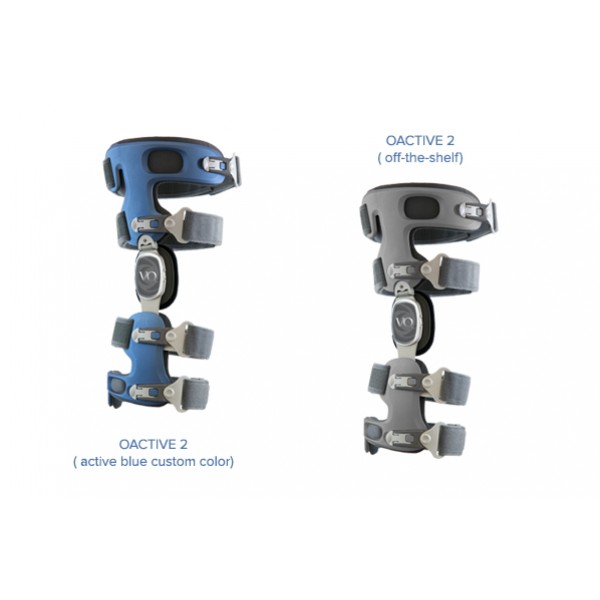
Primary Clinical Indications
- ACL Reconstruction (Post-Op Phase I to Phase III): Protects primary autografts/allografts against peak shear stress during early physical therapy and return-to-activity protocols.
- Combined Multi-Ligament Injuries (MLKI): Indicated for severe multi-ligament trauma (e.g., ACL + MCL rupture, or PCL + LCL posterolateral corner injury) where rotational control is critical.
- Conservative Management of Grade II ACL/MCL Tears: Provides structural stability while micro-vascular tissue repair occurs, helping avoid surgical intervention in low-demand patients.
- Prophylactic Athletic Protection: Used by contact athletes (e.g., football linemen, skiers) to minimize lateral impact forces and prevent valgus collapsed-knee trauma.
Enhancing Patient Compliance through Thermal and Ergonomic Design
Clinical efficacy is directly limited by patient compliance. A brace that slips, causes pressure sores, or traps sweat will ultimately be discarded by the patient, exposing the reconstructed knee to unmitigated shear forces. MOX Medical Technology Co., Ltd. integrates specific ergonomic features to maintain patient compliance:
- Thermoformed Condyle Padding: Medical-grade closed-cell foam inserts conform to the femoral epicondyles, absorbing localized impact energy while preventing skin shear.
- Breathable Air-Mesh Liners: Hydrophobic, anti-microbial fabrics pull moisture away from the skin surface, reducing moisture buildup during long wear cycles.
- Sub-Condylar Notch Tracking: The distal frame architecture fits comfortably against the medial head of the gastrocnemius, preventing downward slippage during dynamic leg movement.
5. Regulatory Standards, HCPCS Coding & DME Procurement Framework
For orthopedic practices, hospital procurement agents, and international medical equipment distributors, acquiring ligament knee supports requires strict compliance with international medical device regulations and insurance reimbursement frameworks.
Global Regulatory Compliance Architecture
Any medical-grade ligament knee brace supplied by MOX Medical Technology Co., Ltd. is manufactured under ISO 13485:2016 quality management systems. Devices distributed into global markets comply with:
- US FDA Registration: Class II Medical Device listing under 21 CFR 890.3475 (Limb Orthosis).
- CE MDR (EU 2017/745): Class I/IIa compliance for technical safety, biocompatibility (ISO 10993), and dynamic stress testing.
- Quality Control Fatigue Testing: Frames undergo >1,000,000 cyclical flexion-extension stress tests under 350 N loads to verify structural reliability before mass production.
HCPCS Billing Code Alignment for North American Providers
In the United States, Durable Medical Equipment, Prosthetics, Orthotics, and Supplies (DMEPOS) reimbursement relies on specific HCPCS codes. Purchasing managers must confirm that structural brace designs meet PDAC (Pricing, Data Analysis, and Coding) verification requirements:
| HCPCS Code | Official Description Overview | Required Product Attributes |
|---|---|---|
| L1845 | Knee orthosis, double upright, thigh and calf cuffs, rigid, with adjustable flexion and extension joint, prefabricated, includes fitting and adjustment. | Rigid aluminum or carbon frame; bilateral polycentric hinges; customizable ROM stops; adjustable strapping. |
| L1852 | Knee orthosis, double upright, thigh and calf cuffs, rigid, with adjustable flexion and extension joint, prefabricated, off-the-shelf. | Off-the-shelf prefabricated rigid construction without complex initial custom fabrication. |
| L1843 | Knee orthosis, single upright, thigh and calf cuffs, rigid, with adjustable flexion and extension joint, prefabricated. | Unilateral frame design primarily indicated for combined OA unloading and ligament guidance. |

6. MOX Medical Technology Co., Ltd. OEM/ODM Manufacturing Capabilities
As a specialized manufacturer with over two decades of ancillary healthcare leadership, MOX Medical Technology Co., Ltd. provides comprehensive solutions for orthopedic brands, medical distributors, and hospital purchasing groups seeking custom OEM/ODM production.
End-to-End Vertical Supply Chain Integration
We manage the complete manufacturing lifecycle—from initial CAD biomechanical simulation to raw material sourcing, CNC precision machining, thermoforming, and cleanroom assembly. This vertical integration provides key operational advantages for our B2B partners:
- Custom Frame Geometry & Sizing Matrices: We manufacture standard anatomical size ranges (S to XXXL) along with custom-molded options for unique patient leg shapes.
- Branded Hinge Covers & Strapping Aesthetics: OEM partners can customize frame colors, strap branding, hinge caps, and packaging to match their brand identity.
- Rigorous Quality Assurance Batch Testing: Every manufacturing batch includes certified mill reports for aluminum alloys, tensile pull-strength verification on straps, and hinge cycle logging.
- Dependable Logistics & Regulatory Documentation: We provide full technical documentation files (STED format), Certificate of Free Sale (CFS), and complete FDA/CE documentation for international regulatory registration.
Conclusion & Strategic Procurement Contact
Providing optimal ligament knee support requires a precise combination of biomechanical engineering, durable material science, and clinical usability. MOX Medical Technology Co., Ltd. remains committed to advancing patient mobility through high-performance, non-invasive orthopedic solutions.
We invite procurement managers, DME distribution partners, and orthopedic clinical directors to contact our engineering and business development team to request sample units, technical specification sheets, or bulk contract pricing.
Initiate a B2B Partnership / Request Technical Samples
Contact our global business development department to discuss your custom manufacturing or distribution requirements:
- Company Name: MOX Medical Technology Co., Ltd.
- Official Email: [email protected]
- Direct Toll-Free Phone: 888.670.3380
- Headquarters Address: 2255 Glades Rd, Boca Raton, FL 33431