1. Executive Summary & B2B Context
In modern orthopedic traumatology and spinal surgery, delayed unions, non-unions, and failed interbody fusions present substantial clinical and financial burdens to health systems, payors, and patients alike. Non-invasive bone growth stimulation has emerged as a gold-standard adjunct therapy, leveraging low-level physical forces—specifically electromagnetic and bioelectric signals—to accelerate osteogenesis without surgical intervention.
For hospital procurement officers, clinical directors, and Durable Medical Equipment (DME) distributors, navigating the landscape of non-invasive osteogenesis stimulators requires a deep understanding of cellular signaling biophysics, clinical efficacy trial data, payor coverage criteria, and device compliance tracking. MOX Medical Technology Co., Ltd., drawing upon more than 20 years of dedicated ancillary healthcare expertise, presents this comprehensive whitepaper to bridge the gap between complex biomechanical science and practical healthcare operations.
This document details the physiological mechanisms underlying non-invasive bone growth stimulation, compares primary energy delivery modalities (PEMF, CMF, CC), reviews standardized reimbursement protocols (including Medicare DME HCPCS coding), and outlines strategic OEM/distribution partnership models designed to optimize patient compliance while generating robust practice revenue.
2. Biophysical & Cellular Mechanisms of Bone Healing
Bone is a dynamically remodeling tissue responsive to mechanical load—a principle classically described by Wolff's Law. At the sub-cellular level, mechanical stress on crystalline collagen matrix structures generates minute piezoelectric potential differences. When a bone sustains a fracture or undergoes surgical arthrodesis, these physiological electrical signals are disrupted, altering the local microenvironment necessary for osteoblast recruitment and osteoclast regulation.
2.1 The Intracellular Calcium-Calmodulin Cascade
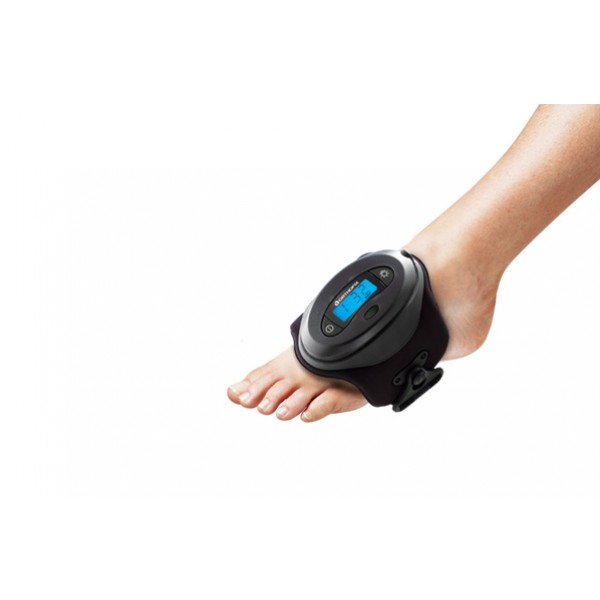
Exogenous electrical and magnetic stimulation replicates endogenous physical forces. When a non-invasive bone growth stimulator applies an electromagnetic field to avascular or recalcitrant bone tissue, it triggers a sequence of intracellular biochemical events:
- Transmembrane Voltage Alteration: Low-amplitude electric fields induce micro-potentials across osteoblast cell membranes.
- Calcium Channel Activation: Voltage-gated calcium channels ($Ca^{2+}$) open, permitting an influx of extracellular calcium ions into the cytosol.
- Calmodulin Binding: Intracellular calcium binds to calmodulin, creating an activated $Ca^{2+}$-Calmodulin complex.
- Upregulation of Endogenous Growth Factors: The activated complex stimulates transcription factors within the nucleus, significantly increasing synthesis of Transforming Growth Factor-beta 1 ($TGF-\beta_1$), Bone Morphogenetic Proteins ($BMP-2$, $BMP-7$), and Vascular Endothelial Growth Factor ($VEGF$).
Upregulation of VEGF is critical during the early stage of secondary bone healing. By stimulating local endothelial proliferation, non-invasive bone growth stimulation promotes capillary sprouting into the fibrocartilaginous callus, restoring tissue oxygenation and facilitating osteoprogenitor cell invasion to accelerate mineralized matrix formation.
3. Modality Comparative Analysis: PEMF vs. CMF vs. CC
In B2B medical device procurement, evaluating the physical delivery mechanism of bone growth stimulation technologies is essential to aligning clinical intention with patient compliance capabilities. Three primary non-invasive modalities dominate the market today.
3.1 Pulsed Electromagnetic Field (PEMF)
PEMF therapy utilizes low-frequency magnetic fields generated by exterior treatment coils placed around the fracture or fusion site. The alternating magnetic field induces secondary electric currents within the conductive extracellular fluid of bone tissue. PEMF devices operate without direct skin contact, allowing placement over casts, rigid braces, and surgical dressings.
3.2 Combined Magnetic Fields (CMF)
CMF technology combines a static direct current (DC) magnetic field with an alternating current (AC) magnetic field. By tuning the frequency to match specific ion resonance frequencies (such as calcium or cyclic AMP), CMF stimulators trigger signal cascades at lower overall energy amplitudes, allowing brief daily application protocols (typically 30 minutes per day).
3.3 Capacitive Coupling (CC)
Capacitive Coupling applies high-frequency, low-voltage electric fields directly to the skin using surface skin electrodes positioned on opposing sides of the target bone segment. While clinically effective, CC requires continuous skin contact (24 hours per day) and carries a higher risk of skin irritation, requiring continuous patient electrode management.
| Modality Parameter | Pulsed Electromagnetic Field (PEMF) | Combined Magnetic Field (CMF) | Capacitive Coupling (CC) |
|---|---|---|---|
| Physical Signal | Low-frequency pulsed magnetic pulses | Combined static & AC magnetic fields | Direct AC electric skin current |
| Daily Wear Duration | 2 to 9 hours continuous / daily | 30 minutes once daily | 24 hours continuous daily |
| Cast & Brace Compatibility | Excellent (Penetrates plaster/fiberglass) | Excellent (Penetrates dressings) | Poor (Requires direct skin electrode contact) |
| Primary Clinical Indication | Non-unions, cervical/lumbar spine fusion | Long bone non-union & spinal fusion | Appendicular non-unions, osteotomies |
| Patient Compliance Rate | High (Flexible home application) | Very High (Short daily wear time) | Moderate (Adhesive skin sensitivity) |
| DME HCPCS Category | E0747 (Non-Spine) / E0748 (Spine) | E0747 (Non-Spine) / E0748 (Spine) | E0747 (Non-Spine) |
4. Clinical Indications & Evidence-Based Performance
The prescription of non-invasive bone growth stimulation is backed by decades of prospective clinical trials and meta-analyses published in peer-reviewed journals including The Journal of Bone and Joint Surgery (JBJS) and Spine. MOX Medical Technology Co., Ltd. continuously evaluates clinical trial data to optimize device design and clinical delivery models.

4.1 Management of Recalcitrant Non-Union Fractures
A non-union is clinically defined as a fracture that has failed to show progressive radiographical healing signs over a period of 9 consecutive months, or where the fracture gap remains static for 3 consecutive months. Clinical trials demonstrate that PEMF stimulation achieves radiological healing in 85% to 92% of established non-unions, offering an alternative to invasive bone grafting and secondary internal fixation surgeries.
4.2 High-Risk Patients & Comorbidity Factors
Certain patient populations present significantly higher rates of pseudarthrosis and delayed union. Non-invasive bone growth stimulation mitigates systemic healing deficits in high-risk categories:
- Diabetic Patients: Microvascular disease impairs local nutrient delivery; electrical stimulation restores metabolic cellular signaling.
- Tobacco Users: Nicotine inhibits microvascular capillary formation; exogenous bone stimulation counteracts nicotine-induced osteoblast suppression.
- Osteoporotic Patients: Low baseline bone mineral density benefits from upregulation of local trabecular mineralization cascades.
- Multi-Level Spinal Arthrodesis: Fusion success decreases exponentially across multi-segment constructs; adjunctive PEMF bone stimulators mitigate pseudarthrosis risk.
5. Information Gain: Overcoming the Compliance Barrier
A critical systemic insight discovered by MOX Medical Technology Co., Ltd. across 20+ years of clinical service is that device efficacy in real-world clinical practice is direct-line correlated with patient wear-time adherence. Prescribing a clinically validated device is insufficient if the patient fails to complete the required daily therapy protocol.
5.1 Integrated Patient Compliance Monitoring & Telemetry
To eliminate compliance blind spots, modern bone growth stimulation units supplied by MOX Medical integrate onboard digital compliance tracking microprocessors. These non-volatile memory logs track actual daily power-on usage versus prescribed operational targets.

5.2 The MOX Medical 24/7 Patient-Centered Support Model
MOX Medical Technology Co., Ltd. implements a robust structural support system designed to remove operational friction for both physician practices and patients:
- 24/7 Dedicated Support Line: Round-the-clock patient assistance to answer technical operational queries, preventing therapy dropouts.
- In-Home Fitting & Education: Certified orthopedic technicians conduct in-person or telehealth fittings, verifying proper positioning over casts or spinal orthoses.
- Structured Follow-Up Schedules: Routine compliance check-ins during the critical initial 30 to 90 days post-surgery.
6. Health Economics, Payor Relations & DME Reimbursement
For orthopedic practices, hospital networks, and DME suppliers, bone growth stimulation represents a critical ancillary service stream governed by rigorous billing compliance standards. Establishing an in-office or outsourced DME program requires precise alignment with Medicare Local Coverage Determinations (LCDs) and commercial payor policies.

6.1 Standard HCPCS Billing Codes
The Durable Medical Equipment Medicare Administrative Contractors (DME MACs) categorize non-invasive osteogenesis stimulation under three primary HCPCS codes:
- HCPCS E0747: Osteogenesis stimulator, electrical, non-invasive, other than spinal applications. (Requires documented non-union of long bone after 9 months of conservative treatment, or failed osteotomy).
- HCPCS E0748: Osteogenesis stimulator, electrical, non-invasive, spinal applications. (Requires documented high-risk spinal fusion factors such as multi-level fusion, revision surgery, tobacco use, or severe diabetes).
- HCPCS E0749: Osteogenesis stimulator, electrical, surgically implanted (Invasive modality).
6.2 Medical Necessity & Prior Authorization Protocols
Securing payor authorization for E0747 and E0748 claims demands meticulous clinical documentation. MOX Medical's payor relations team assists clinical partners in assembling complete submission packages containing:
- Serial radiographic studies (X-ray or CT scans) confirming lack of bony bridging across the fracture or fusion site over time.
- Detailed physician progress notes documenting failed conservative immobilization or clinical risk comorbidities.
- Operative notes describing surgical arthrodesis parameters and construct details.
- Signed Certificate of Medical Necessity (CMN) and written order prior to delivery.
7. The MOX Medical Comprehensive Rehabilitation Ecosystem
Bone growth stimulation does not exist in isolation; it functions within a broader continuum of perioperative joint stabilization, soft tissue therapy, and functional bracing. MOX Medical Technology Co., Ltd. offers a fully integrated product portfolio supporting orthopedic surgeons and rehabilitation specialists throughout every healing phase.
| Product Category | Representative Product Image | Key Clinical Application | Complementary Value in Bone Healing |
|---|---|---|---|
| OA Knee Bracing | 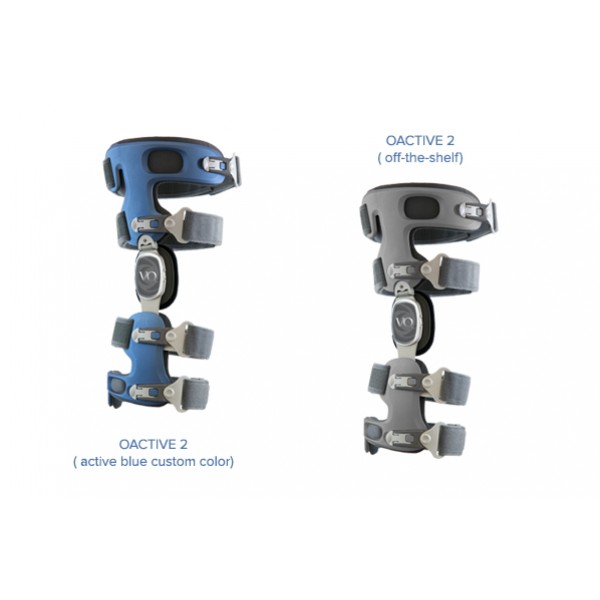 |
Uncompartmental Osteoarthritis unloading | Reduces mechanical load forces across subchondral bone lesions. |
| Spinal Bracing | 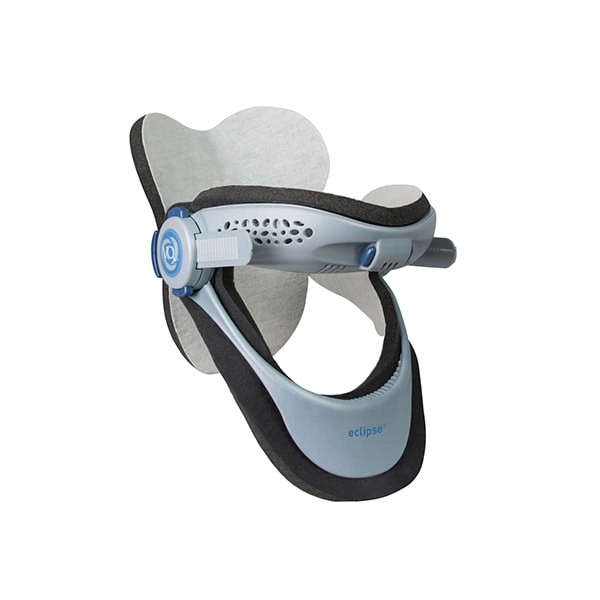 |
Lumbar & Thoracic post-op stabilization | Provides rigid external support to maintain fusion alignment during PEMF therapy. |
| Bionicare System | 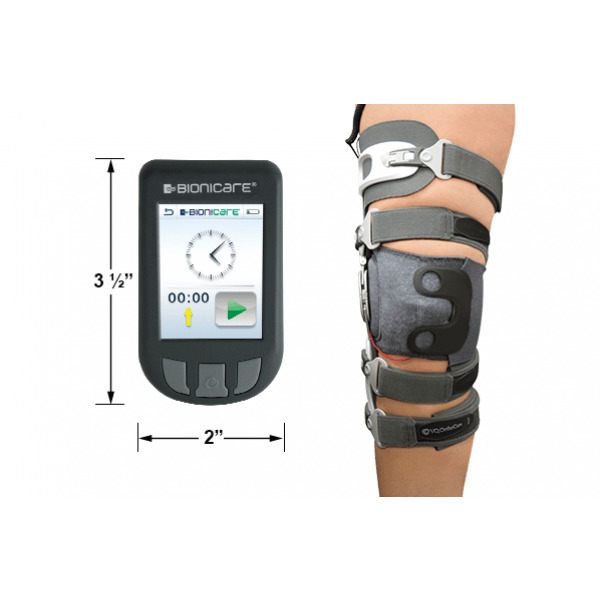 |
Bioelectric signal osteoarthritis therapy | Stimulates articular cartilage cell synthesis and mitigates joint inflammation. |
| Electrotherapy Solutions | 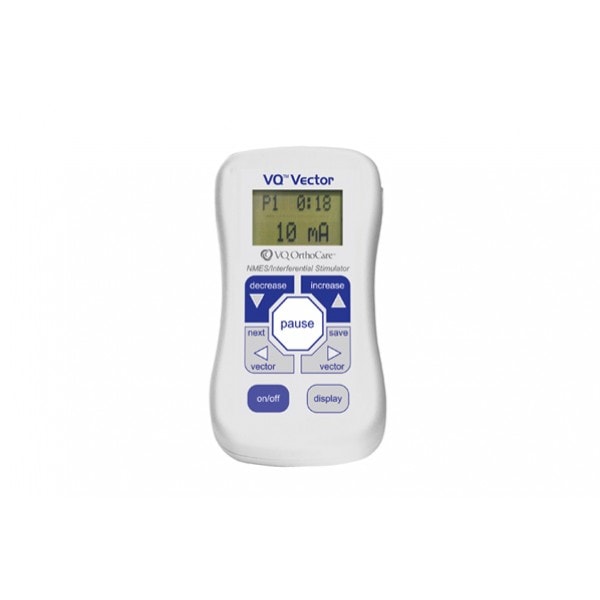 |
TENS & NMES pain/muscle management | Manages postoperative pain and prevents quadriceps atrophy during immobilization. |
7.1 End-to-End Credentialing & Practice Revenue Expansion
In addition to device distribution, MOX Medical Technology Co., Ltd. provides complete accreditation services for medical practices seeking to establish internal DME billing licenses. By assisting providers through Medicare DMEPOS accreditation, state licensure, and managed care contract procurement, MOX Medical enables healthcare facilities to capture internal ancillary revenue streams while improving patient outcomes.
8. Frequently Asked Questions (FAQ) for Clinical & B2B Procurement Teams

Partner with MOX Medical Technology Co., Ltd.
Are you an orthopedic surgeon, procurement manager, or DME distributor seeking high-performance bone growth stimulation solutions and turnkey billing support?
Request a B2B Consultation