
1. Executive Summary & Clinical Rationale
Low back pain (LBP) remains the leading global cause of disability, accounting for millions of clinical visits, surgical consultations, and occupational absences annually. In modern orthopedic and neurosurgical practices, managing acute and chronic spinal instability requires a structured continuum of care that balances conservative non-invasive management with surgical intervention. Within this continuum, spinal bracing for back pain serves a pivotal role as both a primary therapeutic modality and a critical post-operative stabilization asset.
For healthcare systems, Durable Medical Equipment (DME) distributors, and clinical practice administrators, selecting spinal orthoses is no longer merely a purchasing decision; it is a clinical and financial compliance strategy. As payors increase scrutiny over medical necessity documentation and functional outcome benchmarks, B2B procurement decision-makers require deep insights into orthotic biomechanics, HCPCS code verification, and patient compliance drivers.
This clinical white paper published by MOX Medical Technology Co., Ltd. provides a comprehensive technical overview of spinal bracing. Drawing upon 20+ years of ancillary healthcare expertise, this document evaluates the physiological mechanisms of lumbar-sacral orthoses (LSO) and thoracolumbosacral orthoses (TLSO), summarizes landmark clinical evidence, outlines billing compliance protocols, and presents a strategic roadmap for implementing patient-centered DME programs within modern clinical workflows.
Effective spinal orthotic procurement requires aligning anatomical stabilization demands with PDAC-verified HCPCS codes, modular sizing efficiency, and automated patient compliance monitoring to protect both practice revenue and clinical outcome metrics.
2. Biomechanical Mechanisms of Spinal Bracing
To evaluate the therapeutic efficacy of spinal bracing for back pain, clinical leaders must understand the fundamental physical forces exerted by rigid and semi-rigid spinal orthoses upon the axial skeleton and surrounding soft tissues. Spinal bracing operates through four primary biomechanical vectors:
2.1 Elevation of Intra-Abdominal Pressure (IAP)
The primary mechanism by which an LSO or TLSO reduces axial loading on the lumbar spine is through circumferential abdominal compression. When a rigid or semi-rigid anterior panel compresses the abdominal cavity, it transforms the abdomen into a fluid-filled semi-rigid cylinder. This increase in intra-abdominal pressure creates an anterior upward thrust against the diaphragm and a downward thrust against the pelvic floor, effectively offloading compressive axial forces from the lumbar intervertebral discs (specifically L1 through S1) by an estimated 30% to 40% during spinal loading activities.
2.2 Gross Motion Restriction & Segmental Immobilization
Excessive range of motion (ROM) in flexion, extension, lateral bending, and axial rotation can exacerbate spinal instability, irritate nerve roots, and impede tissue healing. Rigid spinal orthoses limit macro-motion across targeted spinal segments:
- Flexion/Extension Control: Rigid anterior and posterior panels act as a three-point pressure system (anterior push at the sternum/suprapubic area matched by posterior counter-forces) to prevent harmful bending.
- Lateral Bending Restriction: Rigid lateral uprights minimize lateral coronal deviation, protecting compromised facet joints and spinal pedicles.
- Rotational Stabilization: While complete rotational restriction in the lower lumbar spine requires hip spica attachments, high-profile LSOs significantly dampen micro-motion at the L3-L5 junctions.
2.3 Postural Correction & Paraspinal Muscle Unloading
Patients suffering from acute lumbar strain or degenerative disc disease frequently experience hyper-lordosis or paraspinal muscle spasms as a protective guarding response. This persistent muscular contraction leads to fatigue, localized ischemia, and heightened pain perception. By providing external structural support, spinal bracing reduces the electromyographic (EMG) activity of the erector spinae muscles, allowing localized muscle relaxation and improved microvascular perfusion.
2.4 Proprioceptive Feedback & Kinesthetic Awareness
Tactile skin contact from a snug orthotic interface acts as a continuous tactile cue. When the patient attempts motions that exceed safe physiological limits, the skin contact resistance provides immediate biofeedback, prompting the patient to voluntarily correct their posture and avoid movements that provoke pain.
3. Taxonomy, HCPCS Coding & Classification Matrix
In B2B medical procurement, clear categorization based on the Healthcare Common Procedure Coding System (HCPCS) is critical for medical necessity verification and DME billing compliance. Spinal braces are broadly classified into Lumbar-Sacral Orthoses (LSO) and Thoracolumbosacral Orthoses (TLSO).
| Orthosis Type | HCPCS Code | Rigidity Level | Anatomical Control Range | Primary Clinical Indications |
|---|---|---|---|---|
| LSO, Sagittal Control | L0627 / L0642 | Semi-Rigid | L1 – S1 Flexion/Extension | Mild Lumbar Strain, Degenerative Disc Disease (DDD), Post-Op Support |
| LSO, Sagittal-Coronal Control | L0631 / L0648 | Rigid Frame / Pulley | L1 – S1 Flexion, Extension, Lateral Bending | Spondylolisthesis, Moderate-to-Severe DDD, Lumbar Spinal Stenosis |
| LSO, Rigid Anterior/Posterior | L0637 / L0650 | Rigid Full Panel | L1 – S1 Tri-Planar Control | Post-Surgical Lumbar Fusion, Laminectomy, Stable Fractures |
| TLSO, Sagittal-Coronal Control | L0639 / L0651 | Rigid Thoracic Extension | T8 – S1 Tri-Planar Control | Thoracolumbar Compression Fractures, Kyphosis, Post-Op Stabilization |
4. Clinical Indications & Evidence-Based Outcomes
Clinical decision-makers evaluating spinal bracing for back pain rely on published clinical trials and systematic literature reviews. Clinical research validates orthotic intervention across multiple diagnostic categories:
4.1 Post-Operative Spinal Fusion & Decompression
Following pedicle screw instrumentation, interbody fusion (PLIF/TLIF/ALIF), or extensive laminectomy, achieving bone graft integration demands an environment devoid of shear stress. Clinical studies published in The Spine Journal indicate that rigid LSO bracing post-fusion reduces hardware strain by up to 45%, significantly lowering rates of pseudoarthrosis and instrumentation failure during the critical 12-week bone remodeling phase.
4.2 Acute Osteoporotic Compression Fractures (VCF)
In geriatric populations presenting with acute vertebral compression fractures, spinal braces—specifically TLSO devices with rigid posterior panels and sternal extensions—effectively prevent progressive kyphotic collapse. Clinical trial data demonstrates rapid pain reduction (VAS score reduction from average 8.2 to 3.4 within 14 days) and accelerated mobilization compared to bed rest alone, reducing pulmonary and thromboembolic complications associated with prolonged immobility.
4.3 Lumbar Spinal Stenosis & Spondylolisthesis
Patients suffering from neurogenic claudication secondary to spinal stenosis often find relief in slight lumbar flexion, which increases the sagittal diameter of the spinal canal. Modern flexed-posture LSOs provided by MOX Medical Technology Co., Ltd. can be customized to maintain minor lordotic reduction, allowing patients to walk greater distances with reduced lower extremity radiculopathy.

5. Institutional B2B Procurement Framework
Healthcare facilities, outpatient orthopedic clinics, and regional DME suppliers face dual imperatives: delivering uncompromised clinical quality while maintaining lean inventory turn rates and billing compliance. When selecting a primary spinal bracing partner, procurement committees should evaluate vendors across five essential benchmarks:
5.1 Universal Sizing & Modular Inventory Efficiency
Legacy bracing systems required stocking 6 to 8 individual discrete sizes (XS through 4XL), tying up immense working capital in shelf inventory. Advanced spinal braces manufactured and distributed by MOX Medical feature modular, universal-sizing pull-tab belt mechanisms. A single stock keeping unit (SKU) can adjust seamlessly to fit waist circumferences ranging from 24 to 50 inches (extendable to 66 inches with bridge panels). This reduces SKU holding costs by over 60% while guaranteeing immediate availability for emergency patient fittings.
5.2 PDAC Coding Verification & Audit Security
Billing DME items without strict Pricing, Data Analysis, and Coding (PDAC) contractor verification exposes healthcare entities to catastrophic Medicare clawbacks during audit reviews. All spinal orthoses supplied by MOX Medical undergo rigorous independent mechanical testing to secure explicit PDAC letter documentation under corresponding HCPCS L-codes.
5.3 Total Cost of Ownership (TCO) & Unit Economics
Beyond initial unit purchase price, procurement officers must calculate total cost of ownership, including replacement rates, patient return rates due to discomfort, and staff fitting time. High-durability materials and intuitive dual-pulley tightening systems minimize patient fitting errors, resulting in near-zero return rates and lower administrative overhead.
6. The MOX Medical Advantage: Ancillary Integration & Patient Care
With over 20 years of ancillary healthcare expertise, MOX Medical Technology Co., Ltd. distinguishes itself from standard DME vendors by providing a comprehensive, patient-centered business ecosystem built on four clinical and operational pillars:

6.1 24/7 Patient Support & White-Glove In-Home Fitting
Patient non-compliance is the single greatest failure point in conservative spinal therapy. If a brace pinches, causes skin irritation, or is put on improperly, patients abandon wear. MOX Medical addresses this challenge through dedicated clinical field support:
- 24/7 Telephone Helpline: Round-the-clock telephone support staffed by trained patient coordinators to answer fitting, compression adjustment, and wear schedule queries.
- In-Home Fitting & Post-Op Monitoring: Certified orthopedic technicians provide direct in-home delivery, custom fitting, and post-operative monitoring to verify alignment and prevent pressure sores.
6.2 DME Provider Accreditation & Credentialing Services
For medical practices seeking to establish an internal DME revenue stream without navigating complex regulatory hurdles, MOX Medical offers turnkey guidance for DME provider accreditation. Our team assists practices in obtaining Medicare DME supplier numbers, enrolling with commercial PPOs, managing credentialing documentation, and ensuring full compliance with CMS quality standards.

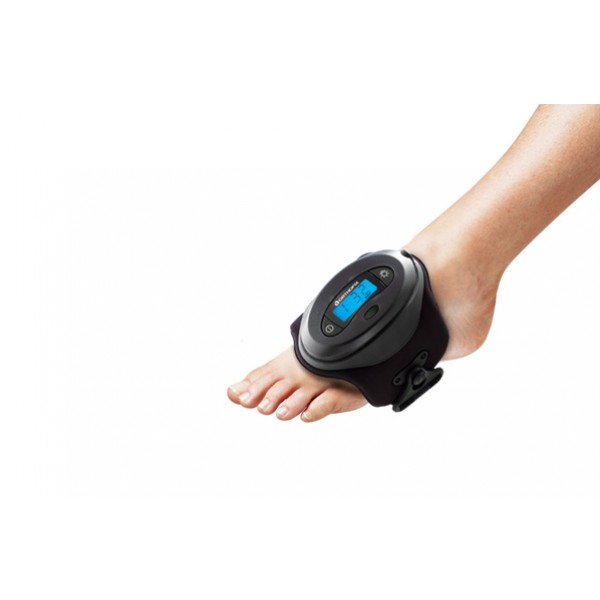
6.3 Comprehensive Ancillary Synergies: Bone Growth & Toxicology
Spinal bracing frequently works in tandem with adjunct therapeutic modalities. MOX Medical delivers integrated ancillary clinical programs that complement orthotic management:

7. Strategies for Maximizing Patient Compliance
A spinal brace can only deliver biomechanical value if worn according to the physician’s prescribed regimen. Historically, patient compliance rates for spinal orthoses hovered below 50% due to bulk, heat retention, and difficulty tightening compression straps. MOX Medical products overcome these compliance barriers through targeted design innovations:
- Breathable Micro-Mesh Fabrics: Open-cell spacer fabrics allow heat and moisture vapor to dissipate, protecting skin integrity during extended wear.
- Mechanical Advantage Pulley Systems: Patent-pending dual-pulley drawstrings provide a 4:1 mechanical advantage, allowing elderly or arthritic patients with limited hand strength to achieve therapeutic compression effortlessly.
- Ergonomic Low-Profile Contour: Anatomically shaped panels conform discreetly beneath patient clothing, reducing wear self-consciousness and promoting public activity compliance.
8. Frequently Asked Questions (FAQ) for B2B Buyers
9. Conclusion & Institutional Procurement Recommendations
In the modern value-based healthcare ecosystem, effective conservative management of back pain requires superior orthotic engineering, verified billing compliance, and active patient engagement. Spinal bracing for back pain provided by MOX Medical Technology Co., Ltd. bridges the gap between biomechanical excellence and operational efficiency.
By partnering with MOX Medical, healthcare organizations gain access to clinically proven orthopedic devices, universal inventory solutions, 24/7 patient care networks, and turnkey DME accreditation assistance—empowering providers to deliver superior clinical outcomes while maximizing practice sustainability.