
Orthopedic Rehabilitation Insights
Latest industry updates, medical bracing guides, and treatment innovation from MOX Medical Technology Co., Ltd.
China Top Varus Valgus Angle Adjustment Manufacturers?
Table of Contents
- Understanding Varus-Valgus Angle Adjustment in Orthopedic Devices
- How Adjustable Varus-Valgus Mechanisms Work
- Key Applications in Rehabilitation and Orthopedic Equipment
- How to Evaluate Varus-Valgus Adjustment Manufacturers in China
- Factors Shaping China’s Varus-Valgus Device Manufacturing Landscape
- FAQS
- Conclusion
- Related Posts
Varus valgus angle adjustment is a small setting with consequences that can reach far beyond a diagram or product brochure. In orthopedic devices, it describes the ability to alter alignment toward or away from the body’s midline. Buyers comparing manufacturers should look past the adjustment range. They should examine how clearly settings are marked, how securely components lock, and how repeatable the adjustment remains after routine use.
A useful perspective comes from John Insall, the influential knee surgeon whose work helped shape modern knee-replacement practice. A practical paraphrase of his alignment-focused approach is: “Assess alignment in the context of the whole knee, not by one angle alone.” This is a paraphrase, not a verified direct quotation. That distinction matters. A precise-sounding quote should never replace a traceable source.
For manufacturers, credibility rests on details that can be checked: documented test methods, material specifications, adjustment increments, and clear instructions for trained users. A dial that turns smoothly on a showroom sample may behave differently after repeated cycles. Ask for evidence. Check it.
This article explores how to compare China-based Varus valgus angle adjustment manufacturers, what technical questions to raise, and which quality signals deserve closer attention. It will also consider a limitation buyers sometimes overlook: published specifications may not fully show how a device performs in real clinical workflows. Careful evaluation takes time, and no single feature settles the decision.
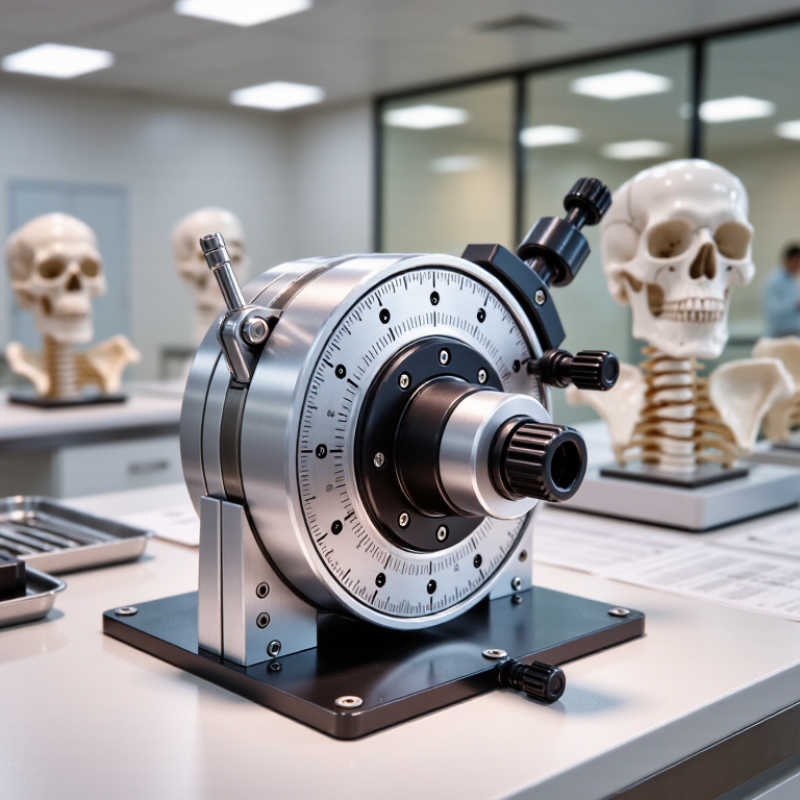
Understanding Varus-Valgus Angle Adjustment in Orthopedic Devices
Varus-valgus adjustment controls side-to-side angulation in certain orthopedic devices. Varus describes inward angulation at a joint; valgus describes outward angulation. In knee braces and alignment systems, a hinge or calibrated adjustment mechanism can help clinicians modify support or alignment. The device does not replace a clinical assessment.
A clinician considers examination findings, imaging, comfort, and the patient’s movement needs before selecting an adjustment. Small changes matter. Even a slight shift can alter pressure around the knee or change how a brace feels during a short walk.
Adjustment scales should be readable, and locking components should hold their position during ordinary movement. These details support consistent fitting, though they do not guarantee a particular outcome.
Reliable evaluation also depends on repeatable measurements and clear instructions. Manufacturers should describe the adjustment range, locking method, and inspection points without implying that one setting suits everyone.
Fit should be checked by a qualified professional, especially if the device causes new pain, skin pressure, or instability.
Not always. A marked angle is only one piece of the picture; real-world comfort and movement may differ from what a measurement suggests.
How Adjustable Varus-Valgus Mechanisms Work
China Top Varus Valgus Angle Adjustment Manufacturers?
How Adjustable Varus-Valgus Mechanisms Work
An adjustable varus-valgus hinge controls how far a brace allows the knee to move inward or outward. Many designs use side hinges with indexed dials, replaceable stops, or small adjustment screws. Turning a dial shifts the stop, limiting motion at a selected angle. The setting should be checked with the brace fitted, not judged from the hinge alone. That detail matters.
The World Health Organization’s 2022 musculoskeletal health report estimates that 1.71 billion people live with musculoskeletal conditions worldwide. This figure is not specific to knee braces, but it shows the broad need for carefully designed support. In practice, manufacturers assess hinge strength, adjustment repeatability, and how securely components hold under movement. A clinician may also need to confirm that the brace sits in line with the leg.
A marked angle can look precise, yet soft tissue, brace fit, and daily movement affect the result. I would question any mechanism that treats a dial setting as a direct measure of correction. A useful design lets trained users make controlled changes, then verify comfort and alignment during wear. Small adjustments are safer to assess than large changes made at once. Real knees are less tidy.
| Mechanism Type | How Adjustment Works | Adjustment Pattern | Practical Advantages | Key Considerations | Useful Evaluation Questions |
|---|---|---|---|---|---|
| Threaded screw or adjustable stop | A screw moves a stop or contact point inward or outward. This changes the permitted position or travel of a connected joint or support component. | Typically continuous within the limits set by the device design; the available range is product-specific. | Allows controlled, incremental changes and can be secured against unintended movement when properly designed. | A screw-adjusted stop may limit joint motion rather than directly change the device’s coronal-plane alignment. Thread wear, locking, and adjustment instructions matter. | Does the screw adjust varus-valgus alignment, a motion limit, or both? How is the setting locked and checked? |
| Slotted plate with clamping fasteners | A component is repositioned along a slot, then secured by tightening fasteners at the selected position. | Usually continuous or semi-continuous, depending on slot geometry, fastener placement, and scale markings. | Simple construction can provide a visible adjustment path and a broad choice of positions within the slot. | Adjustment depends on correct fastener tightening and alignment. The slot’s length and geometry limit the available movement. | Are position marks provided? What tools and tightening procedure are required? Can the setting be inspected after adjustment? |
| Eccentric cam | Rotating an offset cam changes the effective position of a contact surface or linkage point. | Often continuous over a limited range; the amount and direction of change depend on the cam profile and assembly. | Can provide fine changes in a compact mechanism without moving a large component through a long slot. | Cam rotation does not produce a uniform amount of movement at every position. A retention or locking feature is important. | Is the adjustment scale calibrated? How does cam position correspond to the resulting device setting? |
| Indexed plate, detent, or toothed interface | Two parts engage at selected notches, teeth, or indexed positions to hold a chosen setting. | Discrete steps rather than fully continuous adjustment; step size is determined by the design. | Positive engagement can make settings repeatable and easier to record. | Available settings are limited to the provided index positions. Parts must be fully engaged and inspected before use. | How many positions are available? Are the settings clearly marked, and is engagement visible or tactile? |
| Shim or spacer adjustment | Removable or replaceable shims change the spacing between components and can alter the assembled position or contact relationship. | Stepwise; each shim thickness or combination provides a defined change. | Can provide a straightforward, repeatable setup when shim sizes and placement are specified. | Changing shims may require partial disassembly. The effect depends on where the shim is installed and the geometry of the device. | Are shim thicknesses identified? Is there a documented placement sequence and a secure retention method? |
| Powered actuator or motorized adjustment | An electric actuator moves a linkage or support component in response to a controller or user input. | May be continuous or controlled in programmed steps; range, speed, and feedback depend on the system. | Can enable adjustment without manually repositioning a mechanical fastener or plate. | Requires power and control components. Safe limits, failure behavior, maintenance, and adjustment authorization must be considered. | What limits prevent over-adjustment? What happens if power or control is lost, and how is the setting verified? |
Key Applications in Rehabilitation and Orthopedic Equipment
China Top Varus Valgus Angle Adjustment Manufacturers?
Key Applications in Rehabilitation and Orthopedic Equipment
Varus and valgus angle adjustment helps clinicians adapt orthopedic equipment to individual alignment needs. In rehabilitation, adjustable knee braces can support controlled movement after injury or surgery. A therapist may change the hinge setting gradually, then observe how the patient stands, walks, and manages stairs. Small changes matter. The setting should follow a clinical assessment, not guesswork.
In rehabilitation equipment, adjustable mechanisms can also appear in gait-training supports and lower-limb positioning devices. Clear angle markings help staff record settings between sessions. A secure lock matters too; loose hinges can shift during movement and make treatment less predictable. For manufacturers in China, practical design means balancing adjustment range, durability, fit, and ease of cleaning. These details affect daily use in clinics, where equipment may be adjusted many times.
Orthopedic workshops may use angle-adjustable components when fitting or refining braces for different body shapes and activity levels. However, one mechanism cannot suit every patient. Swelling, comfort, walking patterns, and clinician goals can all change the appropriate setup. That part is easy to overlook. Better product development includes testing adjustments under realistic movement, while documenting limits and instructions clearly. A precise hinge is useful, but sound fitting and follow-up remain essential.
How to Evaluate Varus-Valgus Adjustment Manufacturers in China
China Top Varus Valgus Angle Adjustment Manufacturers?
When evaluating varus-valgus adjustment manufacturers in China, look beyond catalog photos and advertised precision. Ask how the mechanism controls angle changes and whether it stays secure under repeated adjustment. A capable supplier should explain materials, tolerances, inspection steps, and the intended operating range in clear terms. Request technical drawings and sample inspection records. Check that adjustment marks are easy to read and that moving parts operate smoothly without noticeable looseness. Small details matter. A polished sample alone cannot prove consistent production quality.
Tips: Ask for a sample and test the adjustment at several settings. Record any sticking, uneven movement, or difficulty locking the position. Compare the sample with the drawings, and ask how production batches are checked. Keep questions specific; vague answers make comparisons harder.
Also review the manufacturer’s communication and change-control process. Can the team explain how design revisions are documented and how reported defects are investigated? Ask for relevant test methods, but confirm what each test actually demonstrates. A single test cannot establish long-term performance. Some specifications may look complete while leaving practical questions unanswered, so independent technical review can be useful before making a decision.
Factors Shaping China’s Varus-Valgus Device Manufacturing Landscape
China’s varus-valgus device manufacturing landscape is shaped by demographic demand, precision engineering, and clinical feedback. The National Bureau of Statistics’ 2023 Statistical Communiqué reported 296.97 million people aged 60 or above, representing 21.1% of China’s population. This is a relevant signal for orthopedic assessment and rehabilitation needs, not a direct sales forecast. That distinction matters.
On the factory floor, dependable angle adjustment depends on more than a readable scale. Hinge alignment, repeatable locking, durable contact surfaces, and clear calibration procedures all affect measurements during repeated clinical use. Manufacturers also need documented quality controls; ISO 13485:2016 provides a widely recognized medical-device quality management framework. Sourcing can shape consistency too: small differences in fasteners or molded parts may create unwanted play at the joint. Clinical feedback helps reveal these issues, though feedback may be uneven across care settings. A less glamorous challenge is keeping instructions precise when products are revised. It deserves more attention. NBS demographic figures offer useful context, but device-specific demand and performance still require product and clinical evidence.
China’s Aging Population: A Demand-Side Factor in Varus-Valgus Device Manufacturing
Population aged 60+ and 65+ in China, 2023–2024 (millions)
China’s growing older population is a relevant demand-side context for orthopedic and rehabilitation products, potentially influencing product planning and manufacturing capacity. These figures describe population—not varus-valgus device sales or production. Source: National Bureau of Statistics of China, Statistical Communiqués for 2023 and 2024.
FAQS
It limits how far a brace allows the knee to move inward or outward. A dial, screw, or replaceable stop may control the setting.
Not necessarily. Brace fit, soft tissue, and movement can change the result. Check alignment while the brace is fitted.
Test several settings and note sticking, uneven movement, or loose locking. Compare the sample with its technical drawings.
Ask about materials, tolerances, inspection steps, and the operating range. Request sample inspection records. Clear answers matter.
Small differences in fasteners or molded parts can create play at the joint. A polished sample proves little about every production batch.
It is a recognized quality management framework for medical devices. It does not, by itself, prove a product’s long-term performance.
China reported 296.97 million people aged 60 or above in 2023. That offers context, not a direct forecast of device sales.
Make small changes, then check comfort and alignment with a trained professional. Real knees are less tidy than a dial.
Conclusion
Varus valgus angle adjustment is an important feature in orthopedic and rehabilitation equipment, allowing the alignment of a joint or limb-supporting device to be adapted to individual needs. Adjustable mechanisms may use controlled hinges, calibrated settings, or locking components to help manage movement and support gradual changes during rehabilitation. Their design should balance precise adjustment with stability, ease of use, and patient comfort.
When evaluating manufacturers in China, buyers can consider engineering capability, material quality, manufacturing consistency, customization options, and the clarity of product documentation. It is also useful to assess how a manufacturer tests adjustment accuracy, durability, and safety, as well as its ability to provide responsive technical support. China’s manufacturing landscape is shaped by medical-device innovation, specialized component suppliers, and growing demand for adaptable orthopedic equipment. A careful comparison of these factors can help identify a suitable manufacturing partner for different clinical and rehabilitation applications.

Blog Tags: