
Clinical Resources & Articles

Orthopedic Rehabilitation Insights

Latest industry updates, medical bracing guides, and treatment innovation from MOX Medical Technology Co., Ltd.

0%

A Ligament knee support is designed to steady the knee when damaged or stretched ligaments reduce confidence during movement. It may use hinges, compression panels, straps, or rigid side frames. The design depends on the ligament involved and the level of instability.

Sports-medicine specialist Dr. Scott D. Rodeo highlights an important limitation: “A brace can support recovery, but it cannot do the rehabilitation for you.” This principle matters when choosing a Ligament knee support. A brace may limit unwanted twisting, guide motion, and reduce the feeling that the knee might give way. It cannot repair torn tissue. It cannot rebuild strength.

Picture a person walking downstairs after an anterior cruciate ligament injury. The brace may keep the knee aligned while the foot meets each step. The quadriceps still need training. Balance still needs practice. Fit matters, too. A loose brace can slide behind the knee. An overly tight one may cause numbness, skin irritation, or swelling below the strap.

The “best” support is not always the strongest one. That sounds obvious, yet many buyers overlook it. A hinged brace may suit instability, while a compression sleeve may offer comfort during mild symptoms. Neither should replace professional assessment after a sudden pop, severe swelling, locking, or inability to bear weight.

This guide explains how ligament knee supports work, what their parts do, and where their usefulness ends. It also considers real-world comfort, movement, and the imperfect decisions people make during recovery.
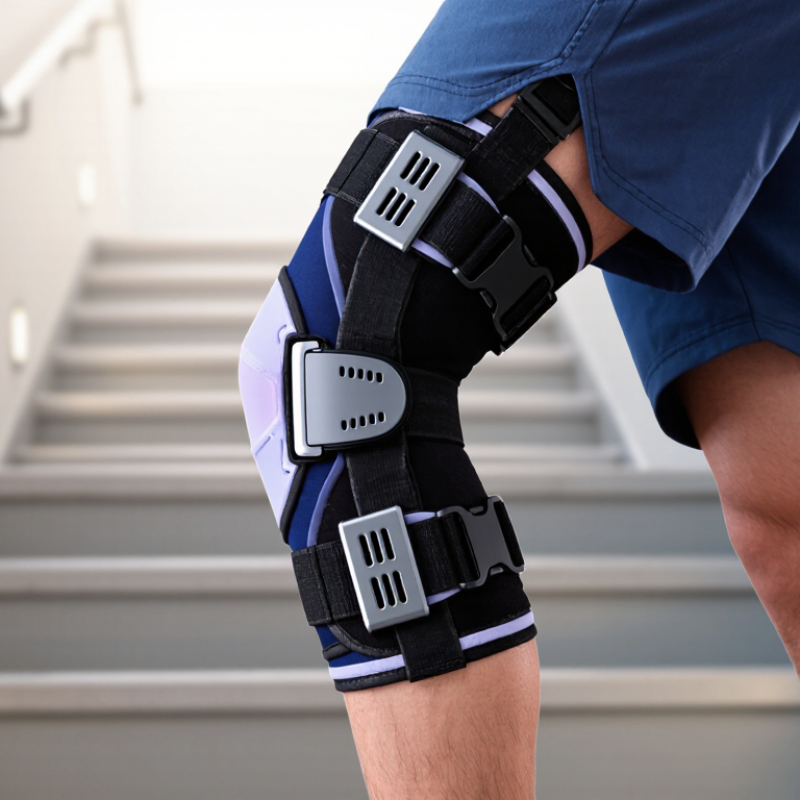
What Is a Ligament Knee Support and How Does It Work?

What Is a Ligament Knee Support?

A ligament knee support is an external device designed to stabilize the knee after ligament strain, injury, or weakness. It usually uses elastic fabric, adjustable straps, or side hinges. These parts apply gentle pressure and limit unwanted movement. The support sits around the knee, while reinforced sections guide the joint during walking, turning, or light exercise.

Different designs provide different levels of control. A compression sleeve may reduce swelling and improve awareness of knee position. A hinged brace can offer stronger support during side-to-side movement. Some models also reduce stress on a specific ligament by controlling the angle of the joint. It is not a cure. It cannot rebuild torn tissue or replace rehabilitation.

Fit matters. A loose support may slide down during movement, while a tight one can cause numbness, skin irritation, or restricted circulation. The knee should feel supported, not squeezed. A common mistake is choosing maximum stability without considering daily comfort. A healthcare professional can assess the injury and recommend suitable support, especially after a major ligament tear or surgery. Use should also follow movement exercises and medical guidance, rather than replacing them.

How Ligament Knee Supports Work

A ligament knee support works by controlling movement, not by repairing damaged tissue. Its hinges and straps can limit twisting, excessive bending, or forward sliding between the thighbone and shinbone. A support designed for anterior cruciate ligament instability may resist forward tibial movement. Other designs provide medial or lateral stability during cutting and landing.

The mechanism is partly mechanical and partly sensory. Firm panels spread pressure around the knee, while compression may improve joint awareness. This feedback can help users adjust movement before the knee reaches a risky position. It does not create a new ligament. That distinction matters.

The World Health Organization reports that musculoskeletal conditions affect about 1.71 billion people worldwide (WHO, 2022). However, widespread pain does not prove that every knee support will work equally well. Fit, injury type, swelling, and activity level change the result. A loose strap may slide during a sprint. An overly tight one may cause numbness or skin irritation.

Evidence remains mixed. The American Academy of Orthopaedic Surgeons’ 2022 clinical guideline found limited support for routine bracing after isolated ACL reconstruction. That finding should encourage reflection, not panic. A brace may improve confidence and movement control, yet it cannot replace rehabilitation, strength training, or professional assessment. Users should check skin color, sensation, and knee response after activity. Pain that increases deserves attention.

How Ligament Knee Supports Work

Knee supports help stabilize the joint by limiting excessive side-to-side movement, reducing unwanted rotation, and providing compression and proprioceptive feedback while allowing functional knee flexion.

Approximate knee flexion angles during common activities. Individual movement ranges vary, and a knee support should not be considered a replacement for medical assessment or ligament rehabilitation.

Types of Ligament Knee Supports

A ligament knee support is an external brace designed to guide movement and reduce unwanted stress around the knee. It may help after a ligament injury, during rehabilitation, or when the joint feels unstable. The right design depends on the affected ligament, injury stage, and daily activity. Fit matters.

Types of Ligament Knee Supports

A hinged knee brace uses side hinges to limit excessive bending or twisting. Clinicians often consider it for moderate instability involving the ACL, MCL, or LCL. A functional brace supports controlled movement after an injury, while a rehabilitative brace may restrict motion during early healing. A prophylactic brace is designed for contact activities, but its protective value can vary between individuals. Compression sleeves offer warmth and mild support, yet they cannot replace a structured brace for significant instability. An unloader brace shifts pressure away from one side of the knee, although it mainly suits certain alignment or arthritis problems.

Tips: Measure the thigh and calf carefully, then check the brace while standing and walking. It should feel secure, not numb or painfully tight. Slipping, swelling, or skin color changes suggest an adjustment is needed. Ask a physiotherapist or orthopedic professional about the correct support level. A brace can improve confidence, but it cannot repair a torn ligament. No support fits every knee. Reassessment may be necessary as swelling decreases.

When to Use a Ligament Knee Support

What Is a Ligament Knee Support and How Does It Work?

A ligament knee support is designed to limit unwanted movement around an injured knee. Hinges, straps, and firm panels can guide motion while reducing side-to-side stress. It does not repair a torn ligament.

The American Academy of Orthopaedic Surgeons estimates that 100,000 to 200,000 anterior cruciate ligament injuries occur annually in the United States. Many patients use supports during rehabilitation, walking, or a gradual return to sport.

When to Use a Ligament Knee Support

Use one after a qualified clinician confirms ligament laxity, sprain, or post-surgical needs. It may help when the knee feels unstable on stairs, uneven ground, or during controlled exercise. A support can also provide confidence, which matters during recovery.

However, serious swelling, locking, numbness, or sudden inability to bear weight needs prompt medical assessment. Do not treat the brace as permission to train harder. Research on long-term protective effects remains mixed, and fit can change as swelling decreases.

Tips: Wear the support over a thin, dry sleeve. Check for slipping, skin marks, or tingling after fifteen minutes. The hinges should align with the knee joint. Start with short periods and follow your rehabilitation plan. I have seen people tighten braces too much, hoping for extra protection. That often reduces comfort and movement. Recheck the fit after walking, especially when swelling changes.

Choosing and Wearing the Right Knee Support

What Is a Ligament Knee Support and How Does It Work?

Choosing the right knee support starts with understanding your injury, activity, and comfort needs. A ligament knee brace can limit unwanted movement and provide gentle compression around the joint. Some designs support side-to-side stability, while others guide the kneecap or reduce strain during walking. The correct choice depends on the affected ligament and your clinician’s advice.

A brace cannot repair a torn ligament.

Fit matters more than appearance.

Measure your thigh and calf where the instructions indicate, then compare the results with the size guide. The brace should feel secure, not painfully tight. You should move your fingers beneath the straps. Check your skin after ten minutes. Red marks, tingling, cold toes, or increasing pain suggest poor adjustment.

Tighter is not always better.

Wear the support during the movements that usually cause discomfort, such as stairs or light exercise. Put it over a thin, dry layer to reduce rubbing. Walk slowly at first. Notice whether your knee feels steadier or simply restricted. That difference is important.

If swelling increases, loosen the straps and stop using the brace temporarily. Seek professional advice for persistent pain, instability, numbness, or major swelling.

I have found that people often focus on maximum support and overlook ordinary comfort. A brace that stays in a drawer cannot help.

FAQS

How does a ligament knee support help an unstable knee?

It controls unwanted movement. Hinges and straps can limit twisting, over-bending, or forward shinbone movement.

Can a knee support repair a torn ligament?

No. It supports movement but does not create new tissue. Rehabilitation remains important.

What types of knee supports are available?

Hinged, functional, rehabilitative, prophylactic, compression, and unloading supports are common options.

Which support may help during cutting or landing?

A hinged or functional brace may provide side-to-side stability. The correct choice depends on the injured ligament.

Can a compression sleeve replace a structured brace?

Usually not for major instability. It offers warmth and mild support, like gentle pressure around the knee.

How tight should the support feel?

It should feel secure, not painfully tight. Numbness, tingling, or color changes suggest poor adjustment.

How can someone check the fit at home?

Measure the thigh and calf carefully. Then test the support while standing and walking.

Does every knee support work equally well?

No. Fit, swelling, injury type, and activity level affect results. Evidence is mixed, so confidence alone is not proof.

When should a user seek professional advice?

Ask a physiotherapist or orthopedic professional when instability continues, swelling changes, or pain increases after activity.

What should users remember during rehabilitation?

A support may improve movement awareness and confidence. It cannot replace strength training, rehabilitation, or careful reassessment.

Conclusion

A ligament knee support is a wearable brace designed to help stabilize the knee and reduce stress on its ligaments during movement. It may provide compression, warmth, and gentle support around the joint, helping improve confidence while walking, exercising, or recovering from a mild injury. Depending on the level of support needed, options include flexible sleeves, hinged braces, and more structured supports that help limit unwanted side-to-side motion.

A ligament knee support may be useful during sports, daily activities, or rehabilitation, but it should not replace professional medical advice when pain, swelling, or instability is severe or persistent. Choosing the right support depends on the affected ligament, comfort, size, and required mobility. It should fit securely without restricting circulation, causing numbness, or creating excessive pressure. Wearing it as directed and combining it with appropriate rest and strengthening exercises can help support safe knee movement.

Ethan

Ethan

Ethan is a seasoned marketing professional with a deep understanding of his company’s product offerings and industry trends. With a passion for delivering insightful content, he frequently updates the company's professional blog, providing readers with valuable information about the latest......