
Clinical Resources & Articles

Orthopedic Rehabilitation Insights

Latest industry updates, medical bracing guides, and treatment innovation from MOX Medical Technology Co., Ltd.

0%

China Top DME Provider Accreditation for Global Buyers

Choosing a Chinese durable medical equipment supplier requires more than comparing prices, catalogs, and production capacity. DME provider accreditation offers a structured way to examine quality systems, staff competence, complaint handling, and patient safety controls. It can also reveal how a manufacturer manages traceability, corrective actions, and outsourced production.

Susan M. Mills, former President and CEO of the Accreditation Commission for Health Care, stated, “Accreditation is a continuous commitment to quality, not a one-time event.” That principle matters when evaluating Chinese DME providers for international purchasing. A credible supplier should present current accreditation records, clearly defined product scopes, audit results, and evidence of regular quality reviews. Buyers should also inspect manufacturing areas, calibration labels, packaging controls, and sample records. Small details matter.

The process is not flawless. A certificate cannot guarantee every shipment will be perfect. A polished factory may still depend on an undocumented subcontractor. Translated procedures may sound clear but remain difficult to apply on the production floor. These weaknesses deserve honest discussion.

Experienced buyers should compare accreditation with product testing, factory audits, customer references, and applicable market requirements. They should verify certificate validity directly with the issuing organization. They should also review recalls, complaint trends, delivery records, and post-sale support.

For global buyers, reliable DME provider accreditation is a starting point, not the final decision. Trust grows through consistent evidence, transparent communication, and repeated performance. That takes time. It is worth it.
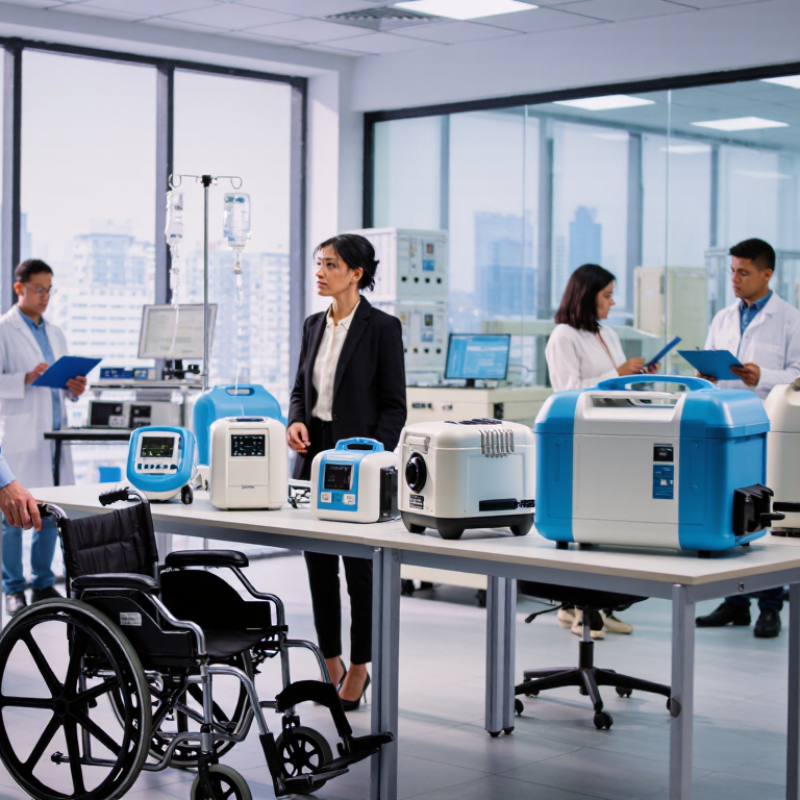
China Top DME Provider Accreditation for Global Buyers

DME Accreditation in China: Definition, Scope, and Global Relevance

China Top DME Provider Accreditation for Global Buyers

DME Accreditation in China: Definition, Scope, and Global Relevance

DME accreditation in China is not one universal certificate. It usually describes verified compliance across manufacturing, quality management, product registration, testing, and export controls. The exact scope depends on product risk and destination market. China’s National Medical Products Administration oversees medical device classification and registration, while accredited laboratories may support safety and performance testing.

The need is expanding. The WHO and UNICEF Global Report on Assistive Technology estimates that more than 2.5 billion people need assistive products worldwide. This number may exceed 3.5 billion by 2050. DME includes items such as mobility aids, patient beds, lifting equipment, and home-care devices. Each category requires different evidence, from load testing to electrical safety records.

For global buyers, credible accreditation should connect documents to physical operations. A factory visit may reveal calibrated instruments, controlled storage, batch labels, and training records. Auditors should check complaint handling and recall procedures, not only certificates. A certificate alone proves little.

The term remains imperfect.

Buyers should confirm whether accreditation covers the actual model, facility, and target country. They should also review ISO 13485 certification, product test reports, traceability records, and post-market controls. WHO ageing data shows that by 2030, one in six people globally will be aged 60 or older. That pressure makes dependable DME sourcing more important, although paperwork can never replace practical product verification.

China DME Accreditation: Definition, Scope, and Global Relevance

China regulates durable medical equipment according to three official medical-device risk classes. Class I devices generally follow a filing pathway, while Class II and Class III devices require registration, with requirements becoming more stringent as potential risk increases. The applicable pathway depends on the product classification, intended use, technical standards, and whether the device is domestic or imported.

For global buyers, “DME accreditation” should therefore be evaluated as a product-compliance and supplier-qualification process rather than as one universal certificate for every provider. Verification commonly includes classification, registration or filing status, quality-management documentation, testing records, and traceability.

Reference framework: China’s three-tier medical-device classification system administered under the National Medical Products Administration.

Core Standards for Evaluating Chinese DME Providers

China Top DME Provider Accreditation for Global Buyers

Core Standards for Evaluating Chinese DME Providers

China’s DME sector serves a growing global need for reliable home-care equipment. The WHO reports that 2.5 billion people need assistive products today. This figure may exceed 3.5 billion by 2050. Buyers should assess providers beyond price, catalog size, or polished websites.

Start with quality-system evidence. ISO 13485 certification should match the actual factory and product scope. ISO 14971 processes show how the provider identifies and controls medical risks. For electrical equipment, IEC 60601 testing is important. Verify certificate numbers, issuing bodies, expiry dates, and audit scope. Grand View Research estimated the global DME market at over 200 billion US dollars in recent market analysis. Demand is strong, but quality differences remain visible. A factory tour can reveal unfinished labels, mixed batches, or weak storage controls. Online documents alone are not enough.

Tips: Request production records, complaint logs, corrective-action reports, and recent inspection results. Order samples from normal production, not specially prepared units. Check packaging, user instructions, traceability codes, and spare-part support. Ask how recalls are handled. Slow answers matter. They may indicate weak internal control. I have found that supplier evaluation is rarely perfect; even experienced buyers can overvalue certificates and undervalue after-sales response. A second-party audit and independent laboratory testing can reduce that blind spot.

Step-by-Step Accreditation Process for International Buyers

China Top DME Provider Accreditation for Global Buyers

International accreditation starts with a precise product scope. List each DME model, intended user, materials, electrical parts, and destination market. Classification changes by jurisdiction. Do not treat registration as proof of product approval. Some regulators separate these functions.

The WHO and UNICEF Global Report on Assistive Technology, published in 2022, estimates that 2.5 billion people need assistive products today. Demand is large, but documentation gaps still delay access.

The Practical Process

The practical process has clear checkpoints. Request business licenses, factory addresses, quality certificates, risk files, test reports, and complaint records. Verify certificate numbers with the issuing body.

Ask for a batch traceability sample, not only a polished PDF. Audit incoming materials, assembly controls, calibration logs, final inspection, and corrective actions.

Then confirm electrical, biocompatibility, labeling, language, and packaging requirements. ISO’s 2023 Survey identifies ISO 13485 as a widely used medical-device quality benchmark. Certification alone cannot replace a technical audit.

Require written change notification and a post-market reporting route. Keep signed records aligned with destination laws.

Buyers often rush factory visits. That is the weak point. A quiet warehouse can hide inconsistent controls.

Documents and Compliance Evidence Required from Suppliers

China Top DME Provider Accreditation for Global Buyers

Reliable DME sourcing begins with verifiable supplier documents, not attractive catalog photos. Buyers should request business registration, manufacturing authorization, and facility information. The legal entity name must match every certificate and invoice. Small mismatches can create serious delays.

Suppliers should provide a current quality management certificate, such as ISO 13485, when applicable. Product files should include specifications, drawings, risk assessments, and test reports. Ask for declarations of conformity and market-specific approvals where required. Electrical products may need safety and electromagnetic compatibility evidence. Materials touching skin require suitable biocompatibility documentation. Keep the evidence product-specific. Generic reports are weak evidence.

An experienced review also checks document dates, issuing bodies, product models, and authorized signatures. Recent factory audit records can show production controls, calibration practices, and complaint handling. Request sample labels, packaging photographs, and traceability procedures. These details reveal how theory becomes daily practice. No supplier file is perfect. We have seen strong factories submit outdated reports or incomplete translations. That does not always prove poor quality, but it requires clarification. Buyers should record open questions, verify corrective actions, and retain communication records. Independent laboratory confirmation may be useful for higher-risk equipment. Accreditation decisions should reflect evidence, not confidence alone.

China Top DME Provider Accreditation for Global Buyers - Documents and Compliance Evidence Required from Suppliers

Compliance Area Document or Evidence Required Key Information to Verify Typical Buyer Use Applicability Evidence Status
Legal Entity Qualification Valid business registration certificate and registered business information Legal entity name, registration number, registered address, business scope, legal representative, and registration status Confirms that the supplier is legally established and authorized to conduct the stated business activities All suppliers Core Requirement
Chinese Medical Device Manufacturing Authorization Medical device manufacturing license or applicable manufacturing filing record issued by the competent Chinese authority Manufacturer identity, permitted device categories, production address, license number, scope, and validity period Verifies that the facility is legally permitted to manufacture the relevant medical devices in China Products classified as medical devices in China Core Requirement
Chinese Product Registration Medical device registration certificate or product filing certificate, together with the approved product technical requirements Product name, model, classification, registrant or filer, intended use, technical requirements, and certificate status Links the offered product to its authorized product registration or filing record Depends on Chinese device classification Classification-Dependent
Quality Management System ISO 13485 certificate issued by an accredited certification body, where available Certification scope, covered manufacturing sites, certificate number, issue date, expiry date, and certification body accreditation Assesses whether the supplier operates a medical-device-specific quality management system Strongly recommended for international supply Market-Dependent
Quality Management Records Quality manual, documented procedures, internal audit records, management review records, and corrective-action records Document control, nonconformity handling, complaint management, corrective and preventive action, and change control Provides operational evidence beyond the presence of a certificate All regulated DME suppliers Core Evidence
Product Technical File Product specification, drawings, bill of materials, risk-management file, user instructions, and manufacturing process information Consistency between technical documents, supplied samples, labeling, intended use, and controlled product versions Supports technical due diligence, product approval, and change-impact assessment All medical-device products Core Evidence
Risk Management Risk-management documentation based on ISO 14971 principles or the applicable market requirement Hazard identification, risk estimation, risk controls, residual-risk evaluation, and benefit-risk conclusions Demonstrates that foreseeable risks have been assessed and controlled throughout the product life cycle Medical devices and higher-risk DME Risk-Dependent
Safety and Performance Testing Current test reports from competent laboratories, including electrical safety, electromagnetic compatibility, mechanical safety, or biocompatibility where applicable Tested model, sample identification, test standards, test dates, deviations, laboratory competence, and result conclusions Confirms that the product has been evaluated against relevant safety and performance requirements Product and market dependent Product-Dependent
Electrical Medical Equipment Applicable electrical safety and electromagnetic compatibility test documentation Correct model and accessories, rated input, applied standards, test configuration, and identified critical components Supports assessment of powered beds, mobility equipment, patient lifts, monitoring equipment, and similar products Powered or electronically controlled equipment Product-Dependent
Biocompatibility Biological evaluation and applicable biocompatibility test reports for patient-contacting materials Contact type and duration, material composition, test methods, sample preparation, and toxicological assessment Assesses risks from skin, mucosal, or tissue contact Patient-contacting products and components Contact-Dependent
European Union Market Access EU Declaration of Conformity and applicable CE-marking technical documentation Applicable EU Medical Device Regulation requirements, device classification, conformity-assessment route, authorized representative details, and notified-body involvement where required Supports placing qualifying medical devices on the European Union market Products supplied to the European Union EU-Dependent
United States Market Access Applicable FDA establishment registration, device listing, clearance, approval, or exemption evidence Correct legal manufacturer, product classification, listing status, authorized U.S. representative where applicable, and consistency with the marketed indication Supports regulatory review for products intended for the United States Products supplied to the United States U.S.-Dependent
United Kingdom Market Access Applicable UK conformity documentation, declaration of conformity, and registration evidence for the Great Britain market Product classification, conformity route, UK responsible person where required, and current market-transition rules Supports regulatory planning for Great Britain and separate Northern Ireland requirements Products supplied to the United Kingdom UK-Dependent
Labeling and Instructions for Use Controlled labels, packaging artwork, symbols, warnings, user manual, maintenance instructions, and translated versions Manufacturer details, model and batch or serial identification, intended use, contraindications, warnings, storage conditions, and language requirements Checks whether product information is complete and suitable for the destination market All regulated DME Core Evidence
Traceability Batch, lot, serial-number, component, and production-record traceability procedure Ability to identify production dates, raw materials, critical suppliers, inspection results, shipped quantities, and affected customers Enables targeted investigation, field safety action, and product recall management All regulated products Core Requirement
Post-Market Surveillance Complaint-handling procedure, adverse-event process, field-action procedure, and periodic trend-review records Complaint intake, investigation timelines, regulatory reporting triggers, escalation rules, and corrective-action effectiveness checks Evaluates the supplier's ability to manage safety issues after shipment All medical devices Core Evidence
Supplier and Subcontractor Control Approved supplier list, supplier evaluation records, quality agreements, and outsourced-process controls Critical component suppliers, inspection responsibilities, change notification, audit rights, and subcontracted manufacturing activities Assesses risks that may exist beyond the primary manufacturing site Products using outsourced or critical components Supply-Chain Dependent
Production and Inspection Controls Process validation records, incoming inspection plans, in-process inspection records, final-release criteria, and calibration records Acceptance criteria, inspection sampling, equipment calibration status, validation rationale, and release authorization Confirms that products are consistently manufactured and released against defined specifications All manufactured DME Core Evidence
Material and Chemical Compliance Material declarations and applicable restricted-substance evidence, such as RoHS or REACH-related documentation where relevant Material composition, restricted substances, supplier declarations, laboratory reports, and product-specific applicability Supports environmental and chemical compliance requirements in destination markets Electronic products, plastics, metals, and products entering regulated markets Market-Dependent
Packaging and Transport Validation Packaging specifications, drop or vibration test results, storage-condition evidence, and transport-risk assessment Packaging configuration, product protection, humidity and temperature limits, shelf-life assumptions, and shipping orientation Reduces damage, contamination, and loss of performance during international transportation Fragile, sterile, powered, or temperature-sensitive products Product-Dependent
Warranty and Technical Support Warranty policy, service-level commitments, spare-parts plan, maintenance schedule, and repair procedure Warranty duration, exclusions, response times, replacement policy, service coverage, and availability of critical parts Assesses total cost of ownership and continuity of care after delivery Reusable, powered, or service-intensive DME Buyer Due Diligence
Change Notification Formal change-control procedure covering materials, components, suppliers, production sites, software, labeling, and intended use Advance-notice period, regulatory impact assessment, revalidation triggers, and buyer approval requirements Prevents unapproved changes that could affect safety, performance, or regulatory status All regulated DME Core Requirement
Audit Readiness Recent internal-audit results, corrective-action closure evidence, and readiness for buyer or third-party site audits Audit scope, findings, root-cause analysis, corrective-action deadlines, objective evidence, and effectiveness verification Provides independent assurance that the documented system is implemented in practice Preferred for strategic or high-volume suppliers Risk-Based
Document Authenticity and Verification Legible certificates, official registration records, verification links or reference numbers, and controlled document translations Issuing authority, certificate holder, scope, site address, validity, revision status, and consistency across all submitted documents Reduces the risk of expired, altered, unrelated, or incorrectly scoped compliance evidence All supplier qualification reviews Mandatory Review
Regulatory obligations vary according to product classification, intended use, technical characteristics, and destination market. Buyers should verify each document with the relevant competent authority or accredited certification source before approval.

How Global Buyers Verify and Maintain Provider Accreditation

China Top DME Provider Accreditation for Global Buyers
Global buyers verify DME provider accreditation before discussing long-term supply. A certificate alone is not enough. Buyers should check the issuing body, accreditation scope, certificate number, and expiration date. The legal company name must match contracts and shipping documents. Any mismatch deserves a written explanation.
A practical review includes a video audit or on-site visit. Inspect production areas, testing equipment, storage conditions, and traceability records. Ask for recent inspection reports, staff training records, and quality-control procedures. For medical equipment, confirm that product files support safety, performance, labeling, and applicable market requirements. Samples should match approved specifications, not only promotional photos.
Accreditation must remain active after the first order. Global buyers can schedule periodic reviews and request updated certificates. They should monitor complaint records, delivery performance, corrective actions, and changes in manufacturing sites. A provider that reports problems early may be more reliable than one showing only perfect results. No system is perfect. That gap matters.
Keep a written supplier file with review dates, responsible personnel, and unresolved issues. Recheck accreditation before contract renewal and after major ownership or process changes. Independent testing can add confidence when product risk is high. In practice, verification is not a one-time gate. It is an evidence-based routine built through records, communication, and repeated performance.

FAQS

What should buyers check before selecting a Chinese DME provider?

Check the actual factory, quality system, product scope, and destination-market requirements. Request business licenses, facility details, certificates, test reports, and complaint records. A polished website proves little.

How can buyers verify quality certificates?

Match the legal entity, factory address, product models, and certificate scope. Confirm certificate numbers, issuing bodies, expiry dates, and audit coverage. Do not trust PDFs alone.

Why is a factory visit important?

A visit can reveal mixed batches, unfinished labels, poor storage, or weak inspection controls. Review incoming materials, assembly areas, calibration records, and final inspection stations. Quiet warehouses can mislead.

What documents should suppliers provide?

Request specifications, drawings, risk assessments, test reports, declarations, and recent audit records. Electrical products may need safety and electromagnetic compatibility evidence. Skin-contact materials need suitable biocompatibility documents.

Should buyers test regular production samples?

Yes. Order samples from normal production, not specially prepared units. Check packaging, instructions, labels, traceability codes, spare parts, and visible defects. One perfect sample is insufficient.

Does ISO 13485 certification prove product approval?

No. It indicates a quality-management framework, not automatic approval in every market. Confirm product-specific requirements and registrations under destination laws. Classification can differ.

How should buyers evaluate after-sales support?

Ask about complaint handling, corrective actions, recalls, spare parts, and post-market reporting. Request written response times and change-notification procedures. Slow replies deserve attention.

What weaknesses commonly appear during supplier evaluation?

Suppliers may submit outdated reports, incomplete translations, or generic test documents. These issues do not always prove poor quality, but they require clarification. I may overvalue certificates.

When is independent laboratory testing useful?

It can confirm safety, materials, electrical performance, or other product-specific claims. Use it for higher-risk equipment or unresolved supplier evidence. Keep signed records.

Conclusion

DME provider accreditation is a structured process that helps global buyers assess the reliability, capability, and compliance of Chinese durable medical equipment suppliers. It typically covers product quality management, manufacturing capacity, technical expertise, documentation control, after-sales support, and the supplier’s ability to meet agreed international requirements. Core evaluation standards may include facility conditions, inspection procedures, quality records, staff qualifications, supply chain controls, and consistency between product specifications and delivered goods.

For international buyers, the accreditation process generally involves supplier pre-screening, document review, risk assessment, remote or on-site audits, product verification, and final approval. Suppliers should provide business credentials, quality certificates, test reports, production records, product specifications, and evidence of corrective actions when needed. Accreditation should not be treated as a one-time decision; buyers should maintain it through periodic performance reviews, updated compliance documents, sample inspections, shipment monitoring, and scheduled reassessments. This approach supports transparent cooperation, reduces procurement risks, and promotes stable long-term supplier relationships.

Lila

Lila

Lila is a dedicated marketing professional with a deep understanding of our company's core offerings and strengths. With a keen eye for detail and a passion for storytelling, she expertly crafts engaging and informative blog posts that highlight the unique features of our products. Lila's expertise......